Dorong UMKM Lebih Maju, Sampoerna dan INOTEK Luncurkan Program UMKM Untuk Indonesia 2024

vritimes

Senin, 26 Februari 2024

facebook twitter whatsapp telegram line copy

URL berhasil dicopy

facebook icon twitter icon whatsapp icon telegram icon line icon copy

URL berhasil dicopy

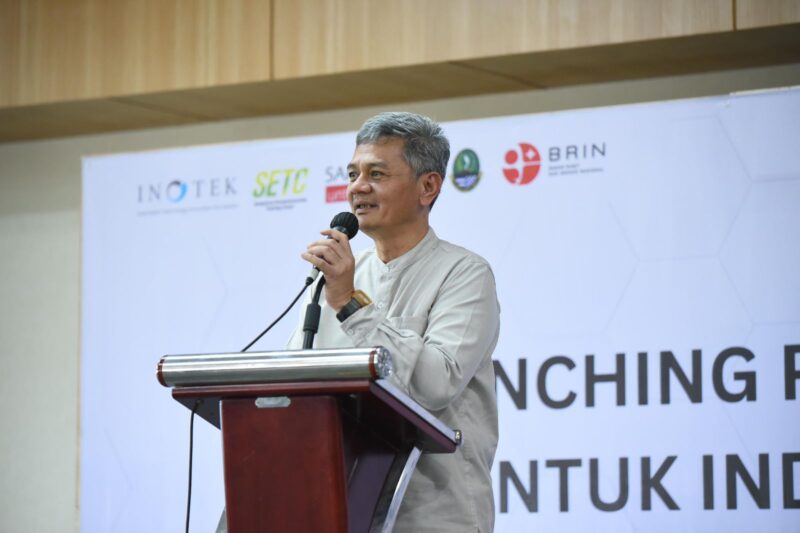
PT HM Sampoerna Tbk. (Sampoerna), melalui Sampoerna Entrepreneurship Training Center (SETC) di bawah Payung Program Keberlanjutan “Sampoerna Untuk Indonesia”, bersama Yayasan Inovasi Teknologi Indonesia (INOTEK), Badan Riset dan Inovasi Nasional (BRIN), dan Pemerintah Provinsi Jawa Barat, meluncurkan Program UMKM Untuk Indonesia untuk Transformasi Digital 2024. Program ini bertujuan mendampingi UMKM agar naik kelas melalui digitalisasi dengan target menyasar 1.000 UMKM di Jawa Barat dan DKI Jakarta.

BANDUNG – PT HM Sampoerna Tbk. (Sampoerna), melalui Sampoerna Entrepreneurship Training Center (SETC) di bawah Payung Program Keberlanjutan “Sampoerna Untuk Indonesia”, bersama Yayasan Inovasi Teknologi Indonesia (INOTEK), Badan Riset dan Inovasi Nasional (BRIN), dan Pemerintah Provinsi Jawa Barat, meluncurkan Program UMKM Untuk Indonesia untuk Transformasi Digital 2024.  Program ini bertujuan mendampingi UMKM agar naik kelas melalui digitalisasi dengan target menyasar 1.000 UMKM di Jawa Barat dan DKI Jakarta.

Kepala Dinas Koperasi dan Usaha Kecil Provinsi Jawa Barat, Rachmat Taufik Garsadi yang hadir mewakili Penjabat (Pj) Gubernur Jabar, Bey Triadi Machmudin mengatakan bahwa Jabar tidak hanya menjadi provinsi dengan penduduk terbanyak, tapi juga provinsi dengan jumlah UMKM terbesar di Indonesia. Mengutip BPS Jawa Barat, terdapat 4,4 juta pelaku UMKM, sementara Kementerian Koperasi dan UKM menyebutkan terdapat 1,4 juta UMKM yang terdata di Jabar.

“Kami dengan berbagai keterbatasan pemerintah untuk membina UMKM sangat berterima kasih kepada stakeholder yang turut membantu membina, menunjang peningkatan UMKM,” ujarnya pada sambutan pembukaan Program UMKM Untuk Indonesia untuk Transformasi Digital 2024 di Bandung, Kamis (22/2/2023).

Program UMKM Untuk Indonesia untuk Transformasi Digital 2024 digelar serentak di 4 lokasi secara hybrid. Selain di Bandung, pembukaan program ini juga digelar di Kabupaten Karawang, Kota Cirebon, dan Kabupaten Bogor. Sekitar 400 pelaku UMKM Jawa Barat hadir secara langsung pada peluncuran program ini yang langsung dilanjutkan dengan workshop pelatihan.

Rachmat melanjutkan, kehadiran program pemberdayaan UMKM dari Sampoerna dan INOTEK sangat penting untuk membantu pelaku UMKM lebih maju dan naik kelas.

Program UMKM Untuk Indonesia 2024, lanjutnya, akan memberikan pelatihan terkait digitalisasi seperti memanfaatkan e-commerce, pengelolaan keuangan hingga membuka akses pasar. Harapannya, pelaku UMKM di Jawa Barat bisa lebih sejahtera dengan pendapatan yang meningkat dan membuka lapangan kerja.

“Saya ingin ketika para pelaku UMKM mengikuti program ini, omzetnya naik. Itu paling penting bagi kami. Omzet naik bisa membuka lapangan kerja, mengurangi pengangguran dan kemiskinan,” paparnya.

Pada kesempatan yang sama, Kepala Urusan Eksternal Sampoerna Ishak Danuningrat mengatakan, Program UMKM Untuk Indonesia untuk Transformasi Digital 2024 membuka kesempatan bagi 1.000 UMKM dari berbagai kota/kabupaten di Jawa Barat dan DKI Jakarta untuk akselerasi kegiatan wirausaha. Setelah peluncuran di Jawa Barat, secara terpisah akan dilangsungkan peluncuran program UMKM Untuk Indonesia di DKI Jakarta.

“Nantinya 10 peserta terbaik akan turut berkompetisi pada acara puncak, yaitu IDEAL (Inovasi dan Digitalisasi Entrepreneur untuk Akselerasi Lanjutan) yang direncanakan akan digelar di bulan Agustus, di mana para peserta terbaik ini akan mendapatkan manfaat berupa pendampingan

untuk peningkatan kapasitas produksi oleh BRIN,” katanya.

Ishak melanjutkan, UMKM adalah tulang punggung ekonomi nasional yang membutuhkan dukungan semua pihak. Untuk itu kolaborasi dengan semua pihak sangat penting guna membantu UMKM lebih maju.

Salah satu tantangan pengembangan UMKM, paparnya, ialah akses pasar. Sampoerna dan INOTEK berusaha menjawab tantangan itu melalui berbagai macam pelatihan dan workshop, termasuk digitalisasi, legalitas usaha, manajemen usaha dan lainnya.

“Kami percaya digitalisasi dan pendampingan adalah kunci mendukung UMKM agar semakin berdaya dan dapat menjadi bagian dari rantai pasok global. Jadi tidak hanya lokal, kami berharap sampai ke global,” paparnya.

Ishak menegaskan, Sampoerna yang pada 2024 telah beroperasi di Indonesia selama 111 tahun ini konsisten berkomitmen untuk mengembangan UMKM Indonesia. Melalui program keberlanjutan Sampoerna Untuk Indonesia, Sampoerna memiliki dua program untuk UMKM.

Pertama, program SETC yang sudah hadir sejak 2007. SETC adalah program kewirausahaan terintegrasi meliputi pelatihan hingga pendampingan UMKM berbagai bidang termasuk hard dan soft skill hingga networking antarpelaku usaha.

Program SETC ditunjang oleh pusat pelatihan seluas 27 hektare (ha) berlokasi di Pasuruan, Jawa Timur. Hingga saat ini, SETC telah memberikan pelatihan kepada lebih dari 70.000 peserta dari seluruh Indonesia.

Kedua, program Sampoerna Retail Community (SRC) yang hadir sejak 2008. SRC bertujuan membina toko kelontong tradisional lebih modern dan mendapatkan akses digital. Saat ini ekosistem SRC telah terkoneksi dengan sekitar 250.000 toko kelontong di seluruh Indonesia.

Toko SRC memiliki Pojok Lokal di mana para pelaku UMKM di sekitar SRC dapat menitipkan produk mereka di toko tersebut. Adapun, mayoritas pelaku UMKM binaan program SETC dan SRC ialah perempuan.

“Ini sama dengan yang disampaikan oleh Presiden beberapa waktu lalu, bahwa tulang punggung dari UMKM adalah para perempuan. Melalui SETC dan SRC kami berharap Indonesia dapat menjadi lebih produktif, mandiri dan berdaya saing,” imbuhnya.

Ketua Dewan Pembina Yayasan INOTEK Ilham Habibie menambahkan melek teknologi digital merupakan keharusan bagi UMKM.

INOTEK meyakini inovasi teknologi aplikatif tepat guna akan memberikan manfaat dan dampak sosial ekonomi yang dapat memberikan kesejahteraan masyarakat.

Program UMKM Untuk Indonesia untuk Transformasi Digital, lanjutnya, dapat mendukung pertumbuhan UMKM lokal secara masif sekaligus mendukung target pemerintah pusat pada 2024, yakni 30 juta UMKM masuk ke ekosistem digital dan 1 juta UMKM bersertifikasi halal.

“Kami meyakini kemampuan UMKM bertransformasi digital akan memperkuat daya saing dan berperan dalam ekonomi digital,” katanya.

Ilham melanjutkan Indonesia mempunyai target Indonesia Emas 2045 atau menjadi negara maju. Hal itu bisa terwujud melalui industri yang kuat, kelas menengah yang besar dan pengembangan UMKM untuk mengangkat sebanyak mungkin warga negara lebih sejahtera secara berkelanjutan.

Press Release ini juga sudah tayang di VRITIMES

Berita Terkait

Boost asset performance, cut downtime, and stay ahead of competitors with PetroSync Reliability & Maintenance training for business leaders. In today’s competitive industrial landscape, asset performance is no longer a technical concern—it is a business imperative. If your competitors can maintain higher equipment availability, reduce downtime, and respond faster to failures, they gain an advantage that directly affects market share, profitability, and customer trust. As a business leader, you may already sense this pressure. The uncomfortable question is not whether reliability matters, but whether your organization is moving fast enough. When Your Competitors Fix Assets Faster Than You Can Imagine two companies operating similar assets in the same market. One experiences frequent unplanned shutdowns, while the other maintains steady production with minimal disruption. The difference is rarely luck—it is capability. Organizations that invest in reliability and maintenance competencies empower their teams to detect issues earlier, prioritize the right tasks, and execute maintenance with precision. Studies consistently show that mature reliability programs can improve maintenance productivity by 15–25%, simply by reducing reactive work and improving planning accuracy. While your team struggles with fire-fighting mode, competitors with structured reliability frameworks move faster, recover quicker, and deliver more consistent output. Over time, that performance gap becomes impossible to ignore. The Hidden Cost of “Business as Usual” in Reliability and Maintenance Many companies underestimate the cost of maintaining the status quo. On the surface, operations may appear stable—but beneath it lies inefficiency. Unoptimized maintenance strategies often lead to: Excessive overtime and labor waste Spare parts overstocking or critical shortages Repeated failures that erode asset life According to industry benchmarks, poor maintenance practices can consume up to 30% of total operating costs. Meanwhile, organizations that adopt reliability-centered approaches typically achieve 10–20% operational efficiency improvements, freeing capital for growth rather than repairs. If competitors are already operating leaner and smarter, continuing “business as usual” is not neutral—it is a risk. How Smart Reliability Leaders Turn Technology Into a Competitive Weapon Forward-thinking leaders understand that reliability excellence is no longer driven by people alone—it is amplified by technology. AI-powered maintenance tools, including intelligent chatbots, are increasingly used to support frontline teams. These systems help technicians access procedures, historical failure data, and troubleshooting guidance instantly. The result is faster decision-making, fewer errors, and reduced dependency on limited expert resources. Organizations implementing AI-assisted maintenance solutions report: Faster issue resolution and improved team productivity Reduced training time for new technicians Operational cost savings of up to 20–30% by minimizing downtime and unnecessary interventions However, technology only delivers value when paired with strong reliability fundamentals. This is where professional capability development becomes critical. Programs such as CMRP Training and CRE Training equip professionals with the strategic and analytical skills needed to turn tools and data into real performance gains. Staying Relevant in an Era Where Asset Performance Defines Market Winners The reality is simple: markets reward organizations that can sustain asset performance under pressure. Those that fail to evolve risk falling behind—not because they lack assets, but because they lack reliability leadership. Reliability-centered methodologies help businesses shift from reactive maintenance to structured decision-making. Programs like ARCM Training enable teams to align maintenance activities with business risk, ensuring resources are focused where they matter most. Meanwhile, RCA Training helps organizations break the cycle of recurring failures that quietly drain profitability. For business leaders, investing in reliability and maintenance capability is not just about equipment—it is about protecting competitiveness. When your competitors can deliver faster, cheaper, and more reliably, the cost of inaction becomes far greater than the cost of transformation. About PetroSync Global Internasional PetroSync was established in Singapore in 2010 and began its expansion into Indonesia in 2013. To this day, PetroSync has become a leading oil and gas training provider, with a participant passing rate as high as 90%. This Press Release has also been published on VRITIMES
Duo Machineast Malaysia Tampil di BINUS @Medan, Dari Tipografi Kinetik ke Media Digital
KAI Logistik Pastikan Kesiapan Layanan Hadapi Angkutan Natal dan Tahun Baru 2025/2026
KAI Logistik Optimalkan KA Kontainer Reefer, Jaga Distribusi Pangan Segar Selama Natal dan Tahun Baru
Tingkatkan Keselamatan dan Kelancaran Perjalanan Kereta Api, KAI Daop 2 Bandung Lakukan Penggantian Rel dan Wesel KA di Sejumlah Titik
Natal dan Tahun Baru Aman, Wakil MUI Sekaligus Ketua FKUB DKI Jakarta Apresiasi Polri
BRI Region 6/Jakarta 1 Rayakan HUT ke-130 dengan Tumpengan dan Penghargaan
Dorong Masyarakat Gunakan Transportasi Umum saat Libur Akhir Tahun, KAI Terapkan Tarif Akhir Pekan pada Layanan LRT Jabodebek

Berita Terbaru

Event

Boost asset performance, cut downtime, and stay ahead of competitors with PetroSync Reliability & Maintenance training for business leaders. In today’s competitive industrial landscape, asset performance is no longer a technical concern—it is a business imperative. If your competitors can maintain higher equipment availability, reduce downtime, and respond faster to failures, they gain an advantage that directly affects market share, profitability, and customer trust. As a business leader, you may already sense this pressure. The uncomfortable question is not whether reliability matters, but whether your organization is moving fast enough. When Your Competitors Fix Assets Faster Than You Can Imagine two companies operating similar assets in the same market. One experiences frequent unplanned shutdowns, while the other maintains steady production with minimal disruption. The difference is rarely luck—it is capability. Organizations that invest in reliability and maintenance competencies empower their teams to detect issues earlier, prioritize the right tasks, and execute maintenance with precision. Studies consistently show that mature reliability programs can improve maintenance productivity by 15–25%, simply by reducing reactive work and improving planning accuracy. While your team struggles with fire-fighting mode, competitors with structured reliability frameworks move faster, recover quicker, and deliver more consistent output. Over time, that performance gap becomes impossible to ignore. The Hidden Cost of “Business as Usual” in Reliability and Maintenance Many companies underestimate the cost of maintaining the status quo. On the surface, operations may appear stable—but beneath it lies inefficiency. Unoptimized maintenance strategies often lead to: Excessive overtime and labor waste Spare parts overstocking or critical shortages Repeated failures that erode asset life According to industry benchmarks, poor maintenance practices can consume up to 30% of total operating costs. Meanwhile, organizations that adopt reliability-centered approaches typically achieve 10–20% operational efficiency improvements, freeing capital for growth rather than repairs. If competitors are already operating leaner and smarter, continuing “business as usual” is not neutral—it is a risk. How Smart Reliability Leaders Turn Technology Into a Competitive Weapon Forward-thinking leaders understand that reliability excellence is no longer driven by people alone—it is amplified by technology. AI-powered maintenance tools, including intelligent chatbots, are increasingly used to support frontline teams. These systems help technicians access procedures, historical failure data, and troubleshooting guidance instantly. The result is faster decision-making, fewer errors, and reduced dependency on limited expert resources. Organizations implementing AI-assisted maintenance solutions report: Faster issue resolution and improved team productivity Reduced training time for new technicians Operational cost savings of up to 20–30% by minimizing downtime and unnecessary interventions However, technology only delivers value when paired with strong reliability fundamentals. This is where professional capability development becomes critical. Programs such as CMRP Training and CRE Training equip professionals with the strategic and analytical skills needed to turn tools and data into real performance gains. Staying Relevant in an Era Where Asset Performance Defines Market Winners The reality is simple: markets reward organizations that can sustain asset performance under pressure. Those that fail to evolve risk falling behind—not because they lack assets, but because they lack reliability leadership. Reliability-centered methodologies help businesses shift from reactive maintenance to structured decision-making. Programs like ARCM Training enable teams to align maintenance activities with business risk, ensuring resources are focused where they matter most. Meanwhile, RCA Training helps organizations break the cycle of recurring failures that quietly drain profitability. For business leaders, investing in reliability and maintenance capability is not just about equipment—it is about protecting competitiveness. When your competitors can deliver faster, cheaper, and more reliably, the cost of inaction becomes far greater than the cost of transformation. About PetroSync Global Internasional PetroSync was established in Singapore in 2010 and began its expansion into Indonesia in 2013. To this day, PetroSync has become a leading oil and gas training provider, with a participant passing rate as high as 90%. This Press Release has also been published on VRITIMES

Berita Terkait

Jumat, 2 Januari 2026 - 20:35

Boost asset performance, cut downtime, and stay ahead of competitors with PetroSync Reliability & Maintenance training for business leaders. In today’s competitive industrial landscape, asset performance is no longer a technical concern—it is a business imperative. If your competitors can maintain higher equipment availability, reduce downtime, and respond faster to failures, they gain an advantage that directly affects market share, profitability, and customer trust. As a business leader, you may already sense this pressure. The uncomfortable question is not whether reliability matters, but whether your organization is moving fast enough. When Your Competitors Fix Assets Faster Than You Can Imagine two companies operating similar assets in the same market. One experiences frequent unplanned shutdowns, while the other maintains steady production with minimal disruption. The difference is rarely luck—it is capability. Organizations that invest in reliability and maintenance competencies empower their teams to detect issues earlier, prioritize the right tasks, and execute maintenance with precision. Studies consistently show that mature reliability programs can improve maintenance productivity by 15–25%, simply by reducing reactive work and improving planning accuracy. While your team struggles with fire-fighting mode, competitors with structured reliability frameworks move faster, recover quicker, and deliver more consistent output. Over time, that performance gap becomes impossible to ignore. The Hidden Cost of “Business as Usual” in Reliability and Maintenance Many companies underestimate the cost of maintaining the status quo. On the surface, operations may appear stable—but beneath it lies inefficiency. Unoptimized maintenance strategies often lead to: Excessive overtime and labor waste Spare parts overstocking or critical shortages Repeated failures that erode asset life According to industry benchmarks, poor maintenance practices can consume up to 30% of total operating costs. Meanwhile, organizations that adopt reliability-centered approaches typically achieve 10–20% operational efficiency improvements, freeing capital for growth rather than repairs. If competitors are already operating leaner and smarter, continuing “business as usual” is not neutral—it is a risk. How Smart Reliability Leaders Turn Technology Into a Competitive Weapon Forward-thinking leaders understand that reliability excellence is no longer driven by people alone—it is amplified by technology. AI-powered maintenance tools, including intelligent chatbots, are increasingly used to support frontline teams. These systems help technicians access procedures, historical failure data, and troubleshooting guidance instantly. The result is faster decision-making, fewer errors, and reduced dependency on limited expert resources. Organizations implementing AI-assisted maintenance solutions report: Faster issue resolution and improved team productivity Reduced training time for new technicians Operational cost savings of up to 20–30% by minimizing downtime and unnecessary interventions However, technology only delivers value when paired with strong reliability fundamentals. This is where professional capability development becomes critical. Programs such as CMRP Training and CRE Training equip professionals with the strategic and analytical skills needed to turn tools and data into real performance gains. Staying Relevant in an Era Where Asset Performance Defines Market Winners The reality is simple: markets reward organizations that can sustain asset performance under pressure. Those that fail to evolve risk falling behind—not because they lack assets, but because they lack reliability leadership. Reliability-centered methodologies help businesses shift from reactive maintenance to structured decision-making. Programs like ARCM Training enable teams to align maintenance activities with business risk, ensuring resources are focused where they matter most. Meanwhile, RCA Training helps organizations break the cycle of recurring failures that quietly drain profitability. For business leaders, investing in reliability and maintenance capability is not just about equipment—it is about protecting competitiveness. When your competitors can deliver faster, cheaper, and more reliably, the cost of inaction becomes far greater than the cost of transformation. About PetroSync Global Internasional PetroSync was established in Singapore in 2010 and began its expansion into Indonesia in 2013. To this day, PetroSync has become a leading oil and gas training provider, with a participant passing rate as high as 90%. This Press Release has also been published on VRITIMES

Jumat, 2 Januari 2026 - 17:09

Duo Machineast Malaysia Tampil di BINUS @Medan, Dari Tipografi Kinetik ke Media Digital

Jumat, 2 Januari 2026 - 11:25

KAI Logistik Pastikan Kesiapan Layanan Hadapi Angkutan Natal dan Tahun Baru 2025/2026

Jumat, 2 Januari 2026 - 09:34

KAI Logistik Optimalkan KA Kontainer Reefer, Jaga Distribusi Pangan Segar Selama Natal dan Tahun Baru

Kamis, 1 Januari 2026 - 20:53

Tingkatkan Keselamatan dan Kelancaran Perjalanan Kereta Api, KAI Daop 2 Bandung Lakukan Penggantian Rel dan Wesel KA di Sejumlah Titik

Berita Terbaru

Event

Boost asset performance, cut downtime, and stay ahead of competitors with PetroSync Reliability & Maintenance training for business leaders. In today’s competitive industrial landscape, asset performance is no longer a technical concern—it is a business imperative. If your competitors can maintain higher equipment availability, reduce downtime, and respond faster to failures, they gain an advantage that directly affects market share, profitability, and customer trust. As a business leader, you may already sense this pressure. The uncomfortable question is not whether reliability matters, but whether your organization is moving fast enough. When Your Competitors Fix Assets Faster Than You Can Imagine two companies operating similar assets in the same market. One experiences frequent unplanned shutdowns, while the other maintains steady production with minimal disruption. The difference is rarely luck—it is capability. Organizations that invest in reliability and maintenance competencies empower their teams to detect issues earlier, prioritize the right tasks, and execute maintenance with precision. Studies consistently show that mature reliability programs can improve maintenance productivity by 15–25%, simply by reducing reactive work and improving planning accuracy. While your team struggles with fire-fighting mode, competitors with structured reliability frameworks move faster, recover quicker, and deliver more consistent output. Over time, that performance gap becomes impossible to ignore. The Hidden Cost of “Business as Usual” in Reliability and Maintenance Many companies underestimate the cost of maintaining the status quo. On the surface, operations may appear stable—but beneath it lies inefficiency. Unoptimized maintenance strategies often lead to: Excessive overtime and labor waste Spare parts overstocking or critical shortages Repeated failures that erode asset life According to industry benchmarks, poor maintenance practices can consume up to 30% of total operating costs. Meanwhile, organizations that adopt reliability-centered approaches typically achieve 10–20% operational efficiency improvements, freeing capital for growth rather than repairs. If competitors are already operating leaner and smarter, continuing “business as usual” is not neutral—it is a risk. How Smart Reliability Leaders Turn Technology Into a Competitive Weapon Forward-thinking leaders understand that reliability excellence is no longer driven by people alone—it is amplified by technology. AI-powered maintenance tools, including intelligent chatbots, are increasingly used to support frontline teams. These systems help technicians access procedures, historical failure data, and troubleshooting guidance instantly. The result is faster decision-making, fewer errors, and reduced dependency on limited expert resources. Organizations implementing AI-assisted maintenance solutions report: Faster issue resolution and improved team productivity Reduced training time for new technicians Operational cost savings of up to 20–30% by minimizing downtime and unnecessary interventions However, technology only delivers value when paired with strong reliability fundamentals. This is where professional capability development becomes critical. Programs such as CMRP Training and CRE Training equip professionals with the strategic and analytical skills needed to turn tools and data into real performance gains. Staying Relevant in an Era Where Asset Performance Defines Market Winners The reality is simple: markets reward organizations that can sustain asset performance under pressure. Those that fail to evolve risk falling behind—not because they lack assets, but because they lack reliability leadership. Reliability-centered methodologies help businesses shift from reactive maintenance to structured decision-making. Programs like ARCM Training enable teams to align maintenance activities with business risk, ensuring resources are focused where they matter most. Meanwhile, RCA Training helps organizations break the cycle of recurring failures that quietly drain profitability. For business leaders, investing in reliability and maintenance capability is not just about equipment—it is about protecting competitiveness. When your competitors can deliver faster, cheaper, and more reliably, the cost of inaction becomes far greater than the cost of transformation. About PetroSync Global Internasional PetroSync was established in Singapore in 2010 and began its expansion into Indonesia in 2013. To this day, PetroSync has become a leading oil and gas training provider, with a participant passing rate as high as 90%. This Press Release has also been published on VRITIMES

Jumat, 2 Jan 2026 - 20:35