
Mengulik Perkembangan Digital Banking Indonesia bersama Binter’s Calling

vritimes

Selasa, 2 April 2024

facebook twitter whatsapp telegram line copy

URL berhasil dicopy

facebook icon twitter icon whatsapp icon telegram icon line icon copy

URL berhasil dicopy

BINUS International dan SeaBank akan melihat keuntungan sinergi digital banking bagi perekonomian melalui talkshow Binter’s Calling pada tanggal 5 Maret 2024.

Perbankan digital (digital banking) sudah semakin populer di Indonesia seiring dengan transisi menuju era digital 4.0 dan cashless society. Di lain sisi, perkembangan ini pun juga membawa banyak potensi untuk ekosistem perbankan yang lebih kuat dan terintegrasi, serta sinergi dengan berbagai aspek kehidupan sehari-hari konsumen individu maupun pelaku industri.
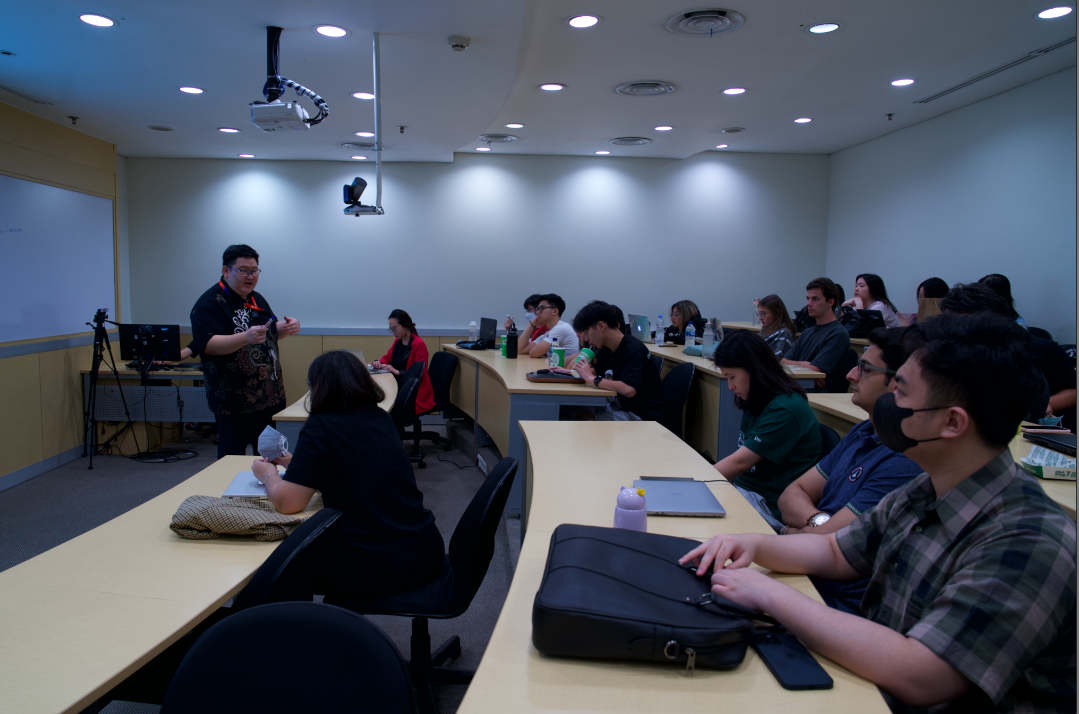
Untuk memahami bagaimana semua hal tersebut akan menguntungkan perekonomian Indonesia, BINUS International pun mengadakan Binter’s Calling bertemakan “Digital Banking, the Ecosystem, and Its Synergy” pada tanggal 5 Maret 2024, pukul 13.30-15.30 WIB di ruang 303/310 BINUS @Senayan, JWC Campus. Acara ini akan mengundang narasumber dari salah satu bank digital yang populer di Indonesia.

Tren Digital Banking di Indonesia

Data yang diterbitkan oleh Katadata telah menunjukkan bahwa transaksi digital banking di tanah air terus meningkat dari tahun ke tahun. Menurut sumber tersebut, frekuensi penggunaan digital banking di kalangan masyarakat telah meningkat sebanyak 158% dalam kurun waktu 5 tahun, dari tahun 2018 hingga 2023. Selain itu, nilai transaksi tersebut juga tidak kalah signifikan. Sebab, masih menurut publikasi yang sama, angkanya telah mencapai Rp5,1 kuadriliun per bulan Agustus 2023.

Beberapa hal yang mendorong popularitas digital banking di Indonesia mencakup integrasi dengan aplikasi penting lainnya seperti e-commerce dan digital wallet, fitur yang lengkap, dan cara pakainya yang bisa menghemat waktu. Alasannya, nasabah tidak perlu menyempatkan waktu di sela-sela kesibukan mereka untuk mendatangi kantor cabang bank jika mereka ingin melakukan pembayaran, mengirim uang, dan mengelola rekening bank.

Tujuan dari Binter’s Calling “Digital Banking, the Ecosystem, and Its Synergy”

Memahami tren digital banking yang akan terus berkembang mengikuti teknologi terkini, BINUS International pun mengundang Junedy Liu, Director of Strategy SeaBank Indonesia, sebagai narasumber untuk acara Binter’s Calling yang bertajuk “Digital Banking, the Ecosystem, and Its Synergy”.

Sesuai dengan temanya, acara talkshow ini akan membahas bagaimana sektor perbankan digital telah berubah mengikuti kebutuhan pasar dan tren teknologi terkini dari tahun ke tahun, serta pentingnya membangun ekosistem yang terintegrasi untuk masyarakat.

Pada sesi GL lalu, mahasiswa berkesempatan mengenali bagaimana model bisnis digital banking bekerja, semua komponen penting dalam ekosistem perbankan digital, sinergi dari setiap komponen tersebut, dan seperti apakah strategi yang digunakan oleh SeaBank untuk membangun kesuksesan bisnis mereka di Indonesia.

“SeaBank sendiri sudah melewati berbagai macam tantangan untuk mendorong penggunaan digital banking di Asia Tenggara, termasuk Indonesia. Saya merasa terhormat bisa membagikan insight serta pengalaman saya kepada semua yang hadir,” ucap Pak Junedy tentang perasaannya ketika terpilih menjadi narasumber Binter’s Calling.

Talkshow Binter’s Calling yang mengundang Junedy Liu ini merupakan salah satu wujud dari kesepakatan antara BINUS International dan SeaBank sejak menandatangani Memorandum of Understanding (MoU) per tanggal 2 Maret 2024 lalu.

MoU tersebut menandakan bahwa BINUS International serta SeaBank akan bekerja sama untuk mendorong inovasi serta memberikan kesempatan bagi sivitas akademika BINUS University untuk belajar tentang seluk-beluk perbankan digital agar siap terjun ke industri setelah lulus.

Sumbangsih Program Finance International BINUS University

Melengkapi pengetahuan dan pengalaman narasumber Binter’s Calling yang telah lama berkecimpung di bidang digital banking, program Finance International dari BINUS International juga menawarkan keunggulan yang akan semakin mempersiapkan mahasiswanya untuk bekerja di sektor tersebut.

“Program Finance International juga menawarkan banyak kesempatan bagi mahasiswa untuk mengumpulkan ilmu dan pengalaman di luar ruang kelas,” tutur Valentina Tohang, SE., M.Buss (ERP), M.Buss (Acc) selaku Head of Program Finance International BINUS University tentang keunggulan program studi naungannya sebelum melanjutkan, “Nah, salah satunya melalui Binter’s Calling yang memberikan mereka exposure sekaligus kesempatan networking dengan pelaku industri seperti Pak Junedy.”

BINUS International menyadari bahwa pembelajaran di ruang kelas saja tidaklah cukup untuk mencetak calon pemimpin dan entrepreneur yang profesional dan kreatif. Mereka juga memerlukan pengalaman nyata dan koneksi dengan ahlinya agar bisa sukses. Sehingga, kurikulum program Finance International memadukan teori dan enrichment di luar ruang kelas melalui talkshow bersama ahlinya.

Digital banking di Indonesia sudah semakin diminati oleh konsumen individu maupun pelaku usaha. Oleh sebab itu, BINUS International mengadakan Binter’s Calling bertemakan “Digital Banking, the Ecosystem, and Its Synergy” yang mengundang Junedy Liu selaku Director of Strategy di SeaBank Indonesia untuk mengulik bagaimana teknologi tersebut akan menguntungkan berbagai sektor. Acara ini diselenggarakan pada tanggal 5 Maret 2024 di BINUS @Senayan, JWC Campus.

Press Release ini juga sudah tayang di VRITIMES

Berita Terkait

Boost asset performance, cut downtime, and stay ahead of competitors with PetroSync Reliability & Maintenance training for business leaders. In today’s competitive industrial landscape, asset performance is no longer a technical concern—it is a business imperative. If your competitors can maintain higher equipment availability, reduce downtime, and respond faster to failures, they gain an advantage that directly affects market share, profitability, and customer trust. As a business leader, you may already sense this pressure. The uncomfortable question is not whether reliability matters, but whether your organization is moving fast enough. When Your Competitors Fix Assets Faster Than You Can Imagine two companies operating similar assets in the same market. One experiences frequent unplanned shutdowns, while the other maintains steady production with minimal disruption. The difference is rarely luck—it is capability. Organizations that invest in reliability and maintenance competencies empower their teams to detect issues earlier, prioritize the right tasks, and execute maintenance with precision. Studies consistently show that mature reliability programs can improve maintenance productivity by 15–25%, simply by reducing reactive work and improving planning accuracy. While your team struggles with fire-fighting mode, competitors with structured reliability frameworks move faster, recover quicker, and deliver more consistent output. Over time, that performance gap becomes impossible to ignore. The Hidden Cost of “Business as Usual” in Reliability and Maintenance Many companies underestimate the cost of maintaining the status quo. On the surface, operations may appear stable—but beneath it lies inefficiency. Unoptimized maintenance strategies often lead to: Excessive overtime and labor waste Spare parts overstocking or critical shortages Repeated failures that erode asset life According to industry benchmarks, poor maintenance practices can consume up to 30% of total operating costs. Meanwhile, organizations that adopt reliability-centered approaches typically achieve 10–20% operational efficiency improvements, freeing capital for growth rather than repairs. If competitors are already operating leaner and smarter, continuing “business as usual” is not neutral—it is a risk. How Smart Reliability Leaders Turn Technology Into a Competitive Weapon Forward-thinking leaders understand that reliability excellence is no longer driven by people alone—it is amplified by technology. AI-powered maintenance tools, including intelligent chatbots, are increasingly used to support frontline teams. These systems help technicians access procedures, historical failure data, and troubleshooting guidance instantly. The result is faster decision-making, fewer errors, and reduced dependency on limited expert resources. Organizations implementing AI-assisted maintenance solutions report: Faster issue resolution and improved team productivity Reduced training time for new technicians Operational cost savings of up to 20–30% by minimizing downtime and unnecessary interventions However, technology only delivers value when paired with strong reliability fundamentals. This is where professional capability development becomes critical. Programs such as CMRP Training and CRE Training equip professionals with the strategic and analytical skills needed to turn tools and data into real performance gains. Staying Relevant in an Era Where Asset Performance Defines Market Winners The reality is simple: markets reward organizations that can sustain asset performance under pressure. Those that fail to evolve risk falling behind—not because they lack assets, but because they lack reliability leadership. Reliability-centered methodologies help businesses shift from reactive maintenance to structured decision-making. Programs like ARCM Training enable teams to align maintenance activities with business risk, ensuring resources are focused where they matter most. Meanwhile, RCA Training helps organizations break the cycle of recurring failures that quietly drain profitability. For business leaders, investing in reliability and maintenance capability is not just about equipment—it is about protecting competitiveness. When your competitors can deliver faster, cheaper, and more reliably, the cost of inaction becomes far greater than the cost of transformation. About PetroSync Global Internasional PetroSync was established in Singapore in 2010 and began its expansion into Indonesia in 2013. To this day, PetroSync has become a leading oil and gas training provider, with a participant passing rate as high as 90%. This Press Release has also been published on VRITIMES
Duo Machineast Malaysia Tampil di BINUS @Medan, Dari Tipografi Kinetik ke Media Digital
KAI Logistik Pastikan Kesiapan Layanan Hadapi Angkutan Natal dan Tahun Baru 2025/2026
KAI Logistik Optimalkan KA Kontainer Reefer, Jaga Distribusi Pangan Segar Selama Natal dan Tahun Baru
Tingkatkan Keselamatan dan Kelancaran Perjalanan Kereta Api, KAI Daop 2 Bandung Lakukan Penggantian Rel dan Wesel KA di Sejumlah Titik
Natal dan Tahun Baru Aman, Wakil MUI Sekaligus Ketua FKUB DKI Jakarta Apresiasi Polri
BRI Region 6/Jakarta 1 Rayakan HUT ke-130 dengan Tumpengan dan Penghargaan
Dorong Masyarakat Gunakan Transportasi Umum saat Libur Akhir Tahun, KAI Terapkan Tarif Akhir Pekan pada Layanan LRT Jabodebek

Berita Terbaru

Event

Boost asset performance, cut downtime, and stay ahead of competitors with PetroSync Reliability & Maintenance training for business leaders. In today’s competitive industrial landscape, asset performance is no longer a technical concern—it is a business imperative. If your competitors can maintain higher equipment availability, reduce downtime, and respond faster to failures, they gain an advantage that directly affects market share, profitability, and customer trust. As a business leader, you may already sense this pressure. The uncomfortable question is not whether reliability matters, but whether your organization is moving fast enough. When Your Competitors Fix Assets Faster Than You Can Imagine two companies operating similar assets in the same market. One experiences frequent unplanned shutdowns, while the other maintains steady production with minimal disruption. The difference is rarely luck—it is capability. Organizations that invest in reliability and maintenance competencies empower their teams to detect issues earlier, prioritize the right tasks, and execute maintenance with precision. Studies consistently show that mature reliability programs can improve maintenance productivity by 15–25%, simply by reducing reactive work and improving planning accuracy. While your team struggles with fire-fighting mode, competitors with structured reliability frameworks move faster, recover quicker, and deliver more consistent output. Over time, that performance gap becomes impossible to ignore. The Hidden Cost of “Business as Usual” in Reliability and Maintenance Many companies underestimate the cost of maintaining the status quo. On the surface, operations may appear stable—but beneath it lies inefficiency. Unoptimized maintenance strategies often lead to: Excessive overtime and labor waste Spare parts overstocking or critical shortages Repeated failures that erode asset life According to industry benchmarks, poor maintenance practices can consume up to 30% of total operating costs. Meanwhile, organizations that adopt reliability-centered approaches typically achieve 10–20% operational efficiency improvements, freeing capital for growth rather than repairs. If competitors are already operating leaner and smarter, continuing “business as usual” is not neutral—it is a risk. How Smart Reliability Leaders Turn Technology Into a Competitive Weapon Forward-thinking leaders understand that reliability excellence is no longer driven by people alone—it is amplified by technology. AI-powered maintenance tools, including intelligent chatbots, are increasingly used to support frontline teams. These systems help technicians access procedures, historical failure data, and troubleshooting guidance instantly. The result is faster decision-making, fewer errors, and reduced dependency on limited expert resources. Organizations implementing AI-assisted maintenance solutions report: Faster issue resolution and improved team productivity Reduced training time for new technicians Operational cost savings of up to 20–30% by minimizing downtime and unnecessary interventions However, technology only delivers value when paired with strong reliability fundamentals. This is where professional capability development becomes critical. Programs such as CMRP Training and CRE Training equip professionals with the strategic and analytical skills needed to turn tools and data into real performance gains. Staying Relevant in an Era Where Asset Performance Defines Market Winners The reality is simple: markets reward organizations that can sustain asset performance under pressure. Those that fail to evolve risk falling behind—not because they lack assets, but because they lack reliability leadership. Reliability-centered methodologies help businesses shift from reactive maintenance to structured decision-making. Programs like ARCM Training enable teams to align maintenance activities with business risk, ensuring resources are focused where they matter most. Meanwhile, RCA Training helps organizations break the cycle of recurring failures that quietly drain profitability. For business leaders, investing in reliability and maintenance capability is not just about equipment—it is about protecting competitiveness. When your competitors can deliver faster, cheaper, and more reliably, the cost of inaction becomes far greater than the cost of transformation. About PetroSync Global Internasional PetroSync was established in Singapore in 2010 and began its expansion into Indonesia in 2013. To this day, PetroSync has become a leading oil and gas training provider, with a participant passing rate as high as 90%. This Press Release has also been published on VRITIMES

Berita Terkait

Jumat, 2 Januari 2026 - 20:35

Boost asset performance, cut downtime, and stay ahead of competitors with PetroSync Reliability & Maintenance training for business leaders. In today’s competitive industrial landscape, asset performance is no longer a technical concern—it is a business imperative. If your competitors can maintain higher equipment availability, reduce downtime, and respond faster to failures, they gain an advantage that directly affects market share, profitability, and customer trust. As a business leader, you may already sense this pressure. The uncomfortable question is not whether reliability matters, but whether your organization is moving fast enough. When Your Competitors Fix Assets Faster Than You Can Imagine two companies operating similar assets in the same market. One experiences frequent unplanned shutdowns, while the other maintains steady production with minimal disruption. The difference is rarely luck—it is capability. Organizations that invest in reliability and maintenance competencies empower their teams to detect issues earlier, prioritize the right tasks, and execute maintenance with precision. Studies consistently show that mature reliability programs can improve maintenance productivity by 15–25%, simply by reducing reactive work and improving planning accuracy. While your team struggles with fire-fighting mode, competitors with structured reliability frameworks move faster, recover quicker, and deliver more consistent output. Over time, that performance gap becomes impossible to ignore. The Hidden Cost of “Business as Usual” in Reliability and Maintenance Many companies underestimate the cost of maintaining the status quo. On the surface, operations may appear stable—but beneath it lies inefficiency. Unoptimized maintenance strategies often lead to: Excessive overtime and labor waste Spare parts overstocking or critical shortages Repeated failures that erode asset life According to industry benchmarks, poor maintenance practices can consume up to 30% of total operating costs. Meanwhile, organizations that adopt reliability-centered approaches typically achieve 10–20% operational efficiency improvements, freeing capital for growth rather than repairs. If competitors are already operating leaner and smarter, continuing “business as usual” is not neutral—it is a risk. How Smart Reliability Leaders Turn Technology Into a Competitive Weapon Forward-thinking leaders understand that reliability excellence is no longer driven by people alone—it is amplified by technology. AI-powered maintenance tools, including intelligent chatbots, are increasingly used to support frontline teams. These systems help technicians access procedures, historical failure data, and troubleshooting guidance instantly. The result is faster decision-making, fewer errors, and reduced dependency on limited expert resources. Organizations implementing AI-assisted maintenance solutions report: Faster issue resolution and improved team productivity Reduced training time for new technicians Operational cost savings of up to 20–30% by minimizing downtime and unnecessary interventions However, technology only delivers value when paired with strong reliability fundamentals. This is where professional capability development becomes critical. Programs such as CMRP Training and CRE Training equip professionals with the strategic and analytical skills needed to turn tools and data into real performance gains. Staying Relevant in an Era Where Asset Performance Defines Market Winners The reality is simple: markets reward organizations that can sustain asset performance under pressure. Those that fail to evolve risk falling behind—not because they lack assets, but because they lack reliability leadership. Reliability-centered methodologies help businesses shift from reactive maintenance to structured decision-making. Programs like ARCM Training enable teams to align maintenance activities with business risk, ensuring resources are focused where they matter most. Meanwhile, RCA Training helps organizations break the cycle of recurring failures that quietly drain profitability. For business leaders, investing in reliability and maintenance capability is not just about equipment—it is about protecting competitiveness. When your competitors can deliver faster, cheaper, and more reliably, the cost of inaction becomes far greater than the cost of transformation. About PetroSync Global Internasional PetroSync was established in Singapore in 2010 and began its expansion into Indonesia in 2013. To this day, PetroSync has become a leading oil and gas training provider, with a participant passing rate as high as 90%. This Press Release has also been published on VRITIMES

Jumat, 2 Januari 2026 - 17:09

Duo Machineast Malaysia Tampil di BINUS @Medan, Dari Tipografi Kinetik ke Media Digital

Jumat, 2 Januari 2026 - 11:25

KAI Logistik Pastikan Kesiapan Layanan Hadapi Angkutan Natal dan Tahun Baru 2025/2026

Jumat, 2 Januari 2026 - 09:34

KAI Logistik Optimalkan KA Kontainer Reefer, Jaga Distribusi Pangan Segar Selama Natal dan Tahun Baru

Kamis, 1 Januari 2026 - 20:53

Tingkatkan Keselamatan dan Kelancaran Perjalanan Kereta Api, KAI Daop 2 Bandung Lakukan Penggantian Rel dan Wesel KA di Sejumlah Titik

Berita Terbaru

Event

Boost asset performance, cut downtime, and stay ahead of competitors with PetroSync Reliability & Maintenance training for business leaders. In today’s competitive industrial landscape, asset performance is no longer a technical concern—it is a business imperative. If your competitors can maintain higher equipment availability, reduce downtime, and respond faster to failures, they gain an advantage that directly affects market share, profitability, and customer trust. As a business leader, you may already sense this pressure. The uncomfortable question is not whether reliability matters, but whether your organization is moving fast enough. When Your Competitors Fix Assets Faster Than You Can Imagine two companies operating similar assets in the same market. One experiences frequent unplanned shutdowns, while the other maintains steady production with minimal disruption. The difference is rarely luck—it is capability. Organizations that invest in reliability and maintenance competencies empower their teams to detect issues earlier, prioritize the right tasks, and execute maintenance with precision. Studies consistently show that mature reliability programs can improve maintenance productivity by 15–25%, simply by reducing reactive work and improving planning accuracy. While your team struggles with fire-fighting mode, competitors with structured reliability frameworks move faster, recover quicker, and deliver more consistent output. Over time, that performance gap becomes impossible to ignore. The Hidden Cost of “Business as Usual” in Reliability and Maintenance Many companies underestimate the cost of maintaining the status quo. On the surface, operations may appear stable—but beneath it lies inefficiency. Unoptimized maintenance strategies often lead to: Excessive overtime and labor waste Spare parts overstocking or critical shortages Repeated failures that erode asset life According to industry benchmarks, poor maintenance practices can consume up to 30% of total operating costs. Meanwhile, organizations that adopt reliability-centered approaches typically achieve 10–20% operational efficiency improvements, freeing capital for growth rather than repairs. If competitors are already operating leaner and smarter, continuing “business as usual” is not neutral—it is a risk. How Smart Reliability Leaders Turn Technology Into a Competitive Weapon Forward-thinking leaders understand that reliability excellence is no longer driven by people alone—it is amplified by technology. AI-powered maintenance tools, including intelligent chatbots, are increasingly used to support frontline teams. These systems help technicians access procedures, historical failure data, and troubleshooting guidance instantly. The result is faster decision-making, fewer errors, and reduced dependency on limited expert resources. Organizations implementing AI-assisted maintenance solutions report: Faster issue resolution and improved team productivity Reduced training time for new technicians Operational cost savings of up to 20–30% by minimizing downtime and unnecessary interventions However, technology only delivers value when paired with strong reliability fundamentals. This is where professional capability development becomes critical. Programs such as CMRP Training and CRE Training equip professionals with the strategic and analytical skills needed to turn tools and data into real performance gains. Staying Relevant in an Era Where Asset Performance Defines Market Winners The reality is simple: markets reward organizations that can sustain asset performance under pressure. Those that fail to evolve risk falling behind—not because they lack assets, but because they lack reliability leadership. Reliability-centered methodologies help businesses shift from reactive maintenance to structured decision-making. Programs like ARCM Training enable teams to align maintenance activities with business risk, ensuring resources are focused where they matter most. Meanwhile, RCA Training helps organizations break the cycle of recurring failures that quietly drain profitability. For business leaders, investing in reliability and maintenance capability is not just about equipment—it is about protecting competitiveness. When your competitors can deliver faster, cheaper, and more reliably, the cost of inaction becomes far greater than the cost of transformation. About PetroSync Global Internasional PetroSync was established in Singapore in 2010 and began its expansion into Indonesia in 2013. To this day, PetroSync has become a leading oil and gas training provider, with a participant passing rate as high as 90%. This Press Release has also been published on VRITIMES

Jumat, 2 Jan 2026 - 20:35