A Peek Inside FEU TECH’s Dynamic Startup Hub for Student Technopreneurs

vritimes

Selasa, 16 April 2024

facebook twitter whatsapp telegram line copy

URL berhasil dicopy

facebook icon twitter icon whatsapp icon telegram icon line icon copy

URL berhasil dicopy

It is not every day we see a classroom turn into a tech startup hub.

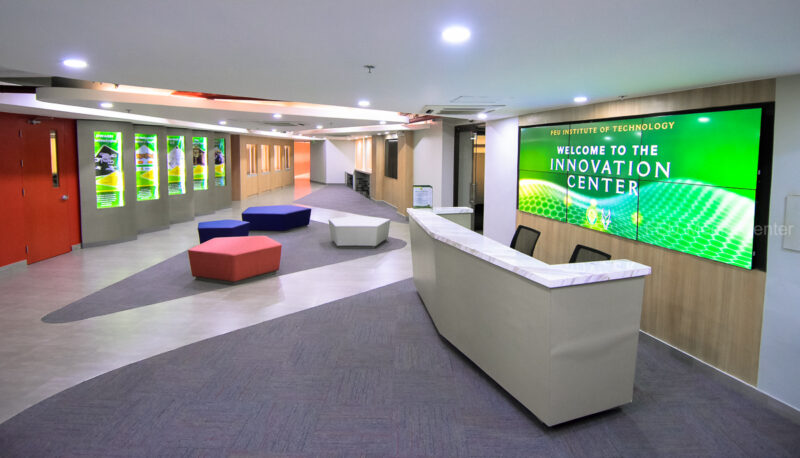
But for FEU Institute of Technology, their FEU TECH Innovation Center (FTIC) is the next generation of university learning that goes beyond conventional classrooms, offering a transformative learning environment.

In 2019, FEU TECH took a more aggressive approach to support entrepreneurship and innovation through its output-based programs. The center provides a space where people can interact with fellow innovators and collaborate on game-changing solutions. FEU TECH aspiring entrepreneurs, whether they are students, faculty, or faculty researchers currently working on their startup ideas, can meet to connect and leverage on the center’s resources to help develop their ideas.

“FEU TECH Innovation Center’s design is a purposeful blend of aesthetics and functionality,” Gianina Napo, FEU TECH Innovation Center Director for Innovation Programs says. “Our goal is to inspire and support the next generation of changemakers who can shape the future of the Philippines and the world. To support this vision, FEU TECH is creating programs, resources, and support mechanisms to cultivate innovative ideas and facilitate the growth of entrepreneurial prospects from the FEU TECH community.”

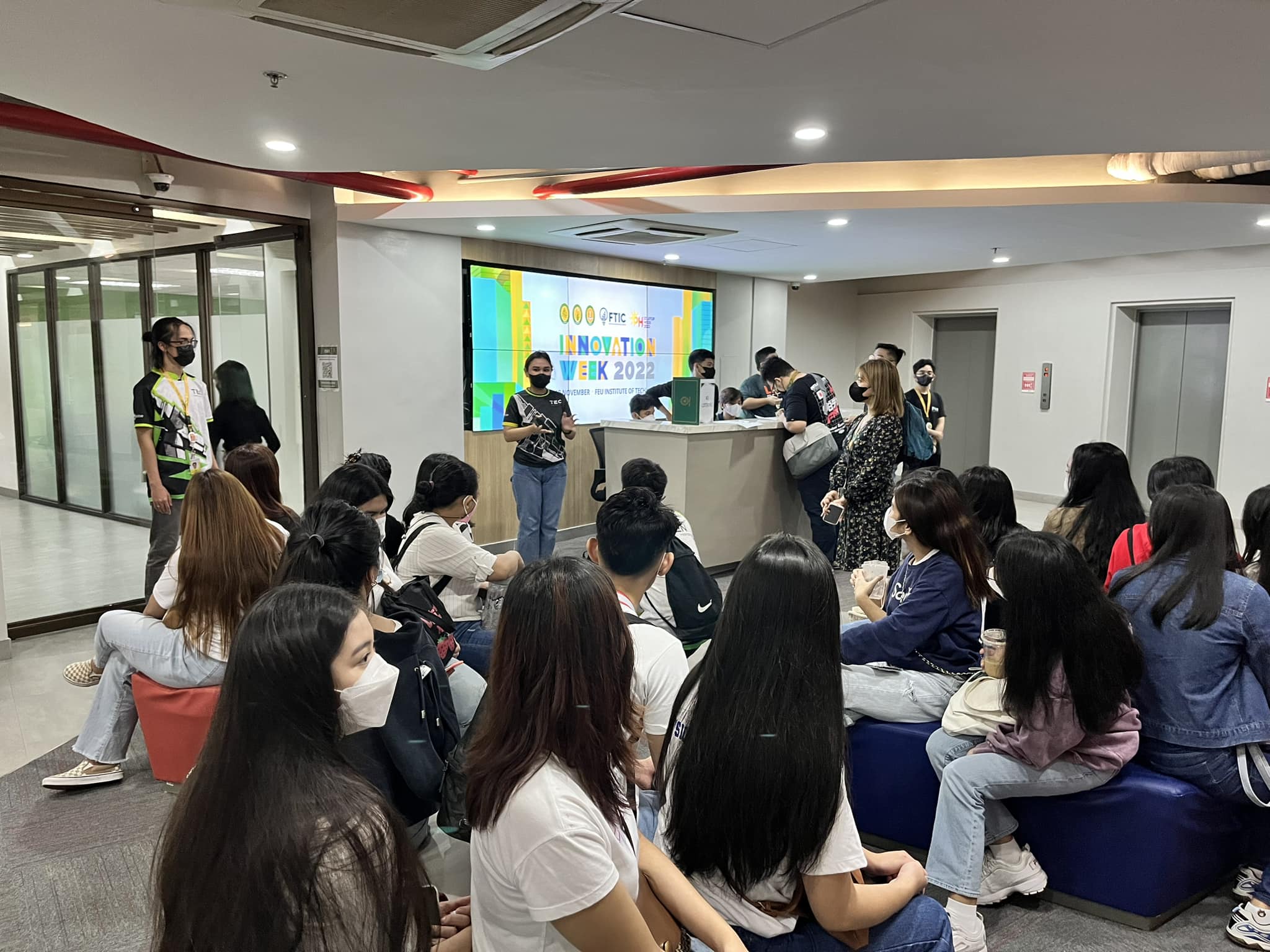
A first within the university belt, the 1,170 square meter hub is situated on the 5th floor of the FEU Engineering Building along Nicanor Reyes Street. It houses specialized function rooms, a shared lounge that doubles as an event space, and a Fabrication Laboratory. The whole center is designed to encourage interaction and idea exchange where students, faculty, and external ecosystem players such as entrepreneurs, researchers, and experts are invited  for learning sessions and events organized and hosted by FEU TECH Innovation Center.

An Innovative Startup Academy

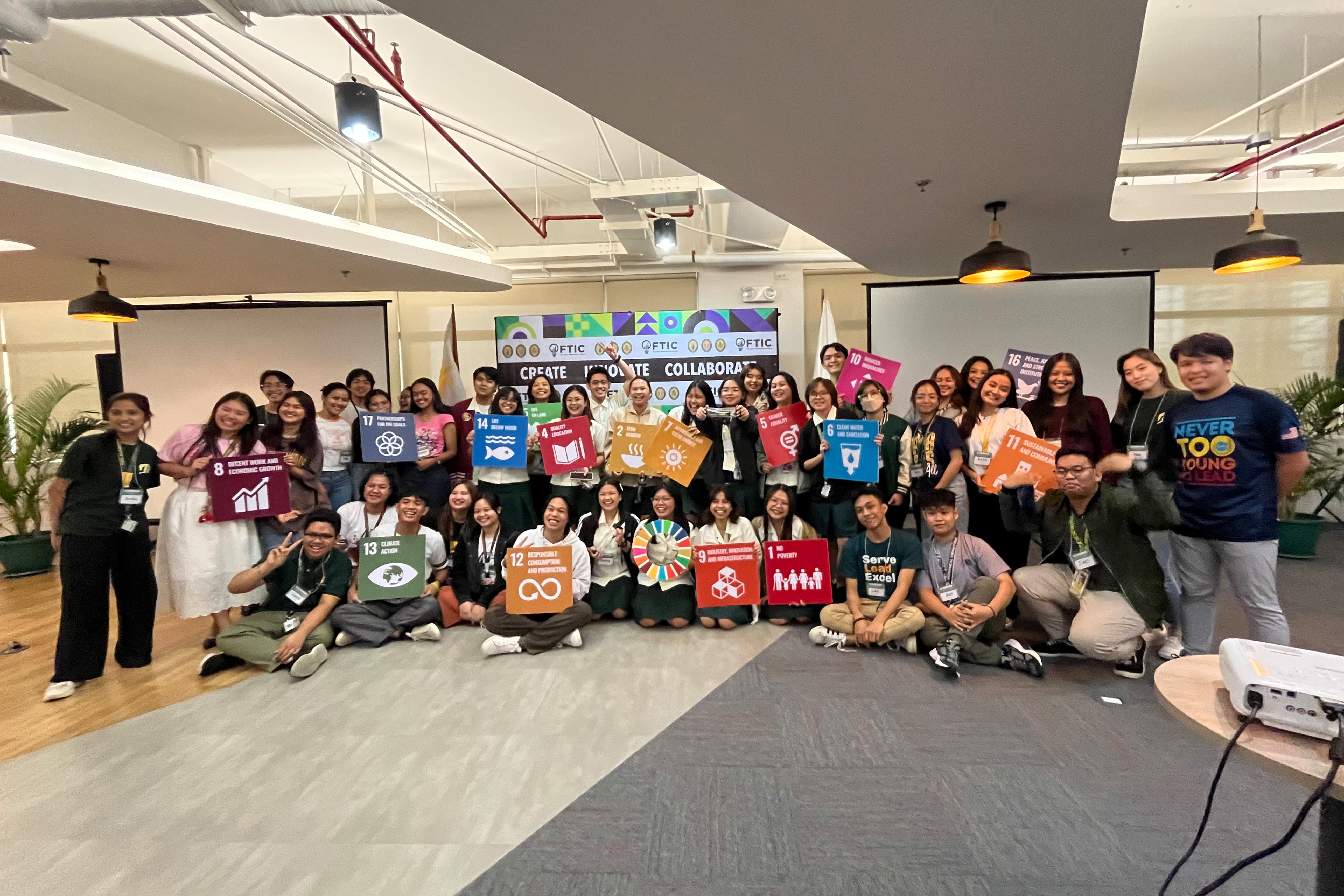
In 2020, FEU TECH Innovation Center introduced an innovative internship track for students who  aspire to be startup founders. The FEU TECH Innovation Center Startup Academy was designed to equip them with the basics of innovation and building a startup through a structured program while receiving coaching and mentorship. Over 700 aspiring student startup founders were under the program which served as a sandbox for  innovation ideas that still follow a structured, industry-standard manner.

“From the past six cohorts, we have seen a range of diverse startup ideas from our FEU Alabang, FEU Diliman, and FEU TECH students who went through the program. This begins with an application period where students with innovative business ideas apply. Once selected, the incubated student startups are exposed to specialized training sessions and workshops. These learning sessions are facilitated by mentors who provide guidance, share insights, and offer practical advice to help students refine their business ideas,” Napo explains.

An upcoming enhanced incubation and acceleration program will be launched to support tech-enabled pre- and early- stage startups from market validation to commercial success. The program will also grant students access to co-working spaces, prototyping facilities, and collaboration tools for business development. Networking activities and industry meetups will expose them to more entrepreneurs and professionals, culminating in a demo day for potential funding and support.

FEU TECH actively partners with key innovation enablers from both the government and private sectors to expand their network. This provides FEU TECH access to resource persons, experts, and even funding for research projects and startups. These external collaborations enhance their ecosystem and offer students and associates valuable connections in the broader entrepreneurial landscape. Their notable collaborations include startup enablers like the Asian Institute of Management- Dado Banatao Incubator (AIM-DBI), QBO Innovation Hub, and PHILDEV Foundation.
Success beyond Classrooms with Student Startups

DWARM Technologies

DWARM Technologies was tapped to develop their artificial intelligence (AI) powered drone to support the COVID response of the government during the initial days of the pandemic. Supported by a grant from the Philippine Department of Science and Technology and support funding from FEU TECH via the FEU TECH Innovation Center, the AI drone which was primarily developed to improve the government’s search and rescue efforts during calamities was redesigned and used to manage the COVID situation.

Espasyo

Espasyo is a team formed after FEU TECH Innovation Center called for student startups to apply for funding opportunities from the Accenture Innovation Grant. It is an all-in-one system for warehouse spaces for e-commerce businesses that helps users find vacant spaces, reserve, pay and rent them as their storage spaces. It will be using Internet of Things technology (IoT) in managing these warehouse spaces.

Vehic

Vehic is another student startup team that went through the FEU TECH Innovation Center Startup Academy. Vehic is a 360 solution for the auto care industry that envisions making a one-stop solution for any services related to vehicles. With Vehic’s mobile application, you can order or schedule a car wash anytime, anywhere. Its founder, Mr. Amir Anan, was chosen to be part of the Manila Ventures Program, an accelerator program backed by Kaya Ventures.

WePyro Tech

WePyro Tech developed a small-scale incinerator that generates energy from the electricity and heat processed during the incineration resulting in waste to energy or energy from waste. It has been hailed as one of the top 10 teams of Ways4Waste Innovation Challenge organized by Villgro Philippines and The Incubation Network.
Shaping Future Technopreneurs

Embracing the challenges of Industry 4.0 and beyond is FEU TECH’s driving force.

The FEU TECH Innovation Center is simply the start of the institution’s efforts in creating future-ready and entrepreneurial lifelong learners.

As the FEU TECH Innovation Center continues to innovate its immersive spaces and startup incubation programs, it creates a legacy that extends beyond classrooms—a legacy of future leaders, innovators, and entrepreneurs poised to navigate and thrive in the dynamic landscape of the digital era.

This Press Release has been published on VRITIMES

Berita Terkait

Boost asset performance, cut downtime, and stay ahead of competitors with PetroSync Reliability & Maintenance training for business leaders. In today’s competitive industrial landscape, asset performance is no longer a technical concern—it is a business imperative. If your competitors can maintain higher equipment availability, reduce downtime, and respond faster to failures, they gain an advantage that directly affects market share, profitability, and customer trust. As a business leader, you may already sense this pressure. The uncomfortable question is not whether reliability matters, but whether your organization is moving fast enough. When Your Competitors Fix Assets Faster Than You Can Imagine two companies operating similar assets in the same market. One experiences frequent unplanned shutdowns, while the other maintains steady production with minimal disruption. The difference is rarely luck—it is capability. Organizations that invest in reliability and maintenance competencies empower their teams to detect issues earlier, prioritize the right tasks, and execute maintenance with precision. Studies consistently show that mature reliability programs can improve maintenance productivity by 15–25%, simply by reducing reactive work and improving planning accuracy. While your team struggles with fire-fighting mode, competitors with structured reliability frameworks move faster, recover quicker, and deliver more consistent output. Over time, that performance gap becomes impossible to ignore. The Hidden Cost of “Business as Usual” in Reliability and Maintenance Many companies underestimate the cost of maintaining the status quo. On the surface, operations may appear stable—but beneath it lies inefficiency. Unoptimized maintenance strategies often lead to: Excessive overtime and labor waste Spare parts overstocking or critical shortages Repeated failures that erode asset life According to industry benchmarks, poor maintenance practices can consume up to 30% of total operating costs. Meanwhile, organizations that adopt reliability-centered approaches typically achieve 10–20% operational efficiency improvements, freeing capital for growth rather than repairs. If competitors are already operating leaner and smarter, continuing “business as usual” is not neutral—it is a risk. How Smart Reliability Leaders Turn Technology Into a Competitive Weapon Forward-thinking leaders understand that reliability excellence is no longer driven by people alone—it is amplified by technology. AI-powered maintenance tools, including intelligent chatbots, are increasingly used to support frontline teams. These systems help technicians access procedures, historical failure data, and troubleshooting guidance instantly. The result is faster decision-making, fewer errors, and reduced dependency on limited expert resources. Organizations implementing AI-assisted maintenance solutions report: Faster issue resolution and improved team productivity Reduced training time for new technicians Operational cost savings of up to 20–30% by minimizing downtime and unnecessary interventions However, technology only delivers value when paired with strong reliability fundamentals. This is where professional capability development becomes critical. Programs such as CMRP Training and CRE Training equip professionals with the strategic and analytical skills needed to turn tools and data into real performance gains. Staying Relevant in an Era Where Asset Performance Defines Market Winners The reality is simple: markets reward organizations that can sustain asset performance under pressure. Those that fail to evolve risk falling behind—not because they lack assets, but because they lack reliability leadership. Reliability-centered methodologies help businesses shift from reactive maintenance to structured decision-making. Programs like ARCM Training enable teams to align maintenance activities with business risk, ensuring resources are focused where they matter most. Meanwhile, RCA Training helps organizations break the cycle of recurring failures that quietly drain profitability. For business leaders, investing in reliability and maintenance capability is not just about equipment—it is about protecting competitiveness. When your competitors can deliver faster, cheaper, and more reliably, the cost of inaction becomes far greater than the cost of transformation. About PetroSync Global Internasional PetroSync was established in Singapore in 2010 and began its expansion into Indonesia in 2013. To this day, PetroSync has become a leading oil and gas training provider, with a participant passing rate as high as 90%. This Press Release has also been published on VRITIMES
Duo Machineast Malaysia Tampil di BINUS @Medan, Dari Tipografi Kinetik ke Media Digital
KAI Logistik Pastikan Kesiapan Layanan Hadapi Angkutan Natal dan Tahun Baru 2025/2026
KAI Logistik Optimalkan KA Kontainer Reefer, Jaga Distribusi Pangan Segar Selama Natal dan Tahun Baru
Tingkatkan Keselamatan dan Kelancaran Perjalanan Kereta Api, KAI Daop 2 Bandung Lakukan Penggantian Rel dan Wesel KA di Sejumlah Titik
Natal dan Tahun Baru Aman, Wakil MUI Sekaligus Ketua FKUB DKI Jakarta Apresiasi Polri
BRI Region 6/Jakarta 1 Rayakan HUT ke-130 dengan Tumpengan dan Penghargaan
Dorong Masyarakat Gunakan Transportasi Umum saat Libur Akhir Tahun, KAI Terapkan Tarif Akhir Pekan pada Layanan LRT Jabodebek

Berita Terbaru

Event

Boost asset performance, cut downtime, and stay ahead of competitors with PetroSync Reliability & Maintenance training for business leaders. In today’s competitive industrial landscape, asset performance is no longer a technical concern—it is a business imperative. If your competitors can maintain higher equipment availability, reduce downtime, and respond faster to failures, they gain an advantage that directly affects market share, profitability, and customer trust. As a business leader, you may already sense this pressure. The uncomfortable question is not whether reliability matters, but whether your organization is moving fast enough. When Your Competitors Fix Assets Faster Than You Can Imagine two companies operating similar assets in the same market. One experiences frequent unplanned shutdowns, while the other maintains steady production with minimal disruption. The difference is rarely luck—it is capability. Organizations that invest in reliability and maintenance competencies empower their teams to detect issues earlier, prioritize the right tasks, and execute maintenance with precision. Studies consistently show that mature reliability programs can improve maintenance productivity by 15–25%, simply by reducing reactive work and improving planning accuracy. While your team struggles with fire-fighting mode, competitors with structured reliability frameworks move faster, recover quicker, and deliver more consistent output. Over time, that performance gap becomes impossible to ignore. The Hidden Cost of “Business as Usual” in Reliability and Maintenance Many companies underestimate the cost of maintaining the status quo. On the surface, operations may appear stable—but beneath it lies inefficiency. Unoptimized maintenance strategies often lead to: Excessive overtime and labor waste Spare parts overstocking or critical shortages Repeated failures that erode asset life According to industry benchmarks, poor maintenance practices can consume up to 30% of total operating costs. Meanwhile, organizations that adopt reliability-centered approaches typically achieve 10–20% operational efficiency improvements, freeing capital for growth rather than repairs. If competitors are already operating leaner and smarter, continuing “business as usual” is not neutral—it is a risk. How Smart Reliability Leaders Turn Technology Into a Competitive Weapon Forward-thinking leaders understand that reliability excellence is no longer driven by people alone—it is amplified by technology. AI-powered maintenance tools, including intelligent chatbots, are increasingly used to support frontline teams. These systems help technicians access procedures, historical failure data, and troubleshooting guidance instantly. The result is faster decision-making, fewer errors, and reduced dependency on limited expert resources. Organizations implementing AI-assisted maintenance solutions report: Faster issue resolution and improved team productivity Reduced training time for new technicians Operational cost savings of up to 20–30% by minimizing downtime and unnecessary interventions However, technology only delivers value when paired with strong reliability fundamentals. This is where professional capability development becomes critical. Programs such as CMRP Training and CRE Training equip professionals with the strategic and analytical skills needed to turn tools and data into real performance gains. Staying Relevant in an Era Where Asset Performance Defines Market Winners The reality is simple: markets reward organizations that can sustain asset performance under pressure. Those that fail to evolve risk falling behind—not because they lack assets, but because they lack reliability leadership. Reliability-centered methodologies help businesses shift from reactive maintenance to structured decision-making. Programs like ARCM Training enable teams to align maintenance activities with business risk, ensuring resources are focused where they matter most. Meanwhile, RCA Training helps organizations break the cycle of recurring failures that quietly drain profitability. For business leaders, investing in reliability and maintenance capability is not just about equipment—it is about protecting competitiveness. When your competitors can deliver faster, cheaper, and more reliably, the cost of inaction becomes far greater than the cost of transformation. About PetroSync Global Internasional PetroSync was established in Singapore in 2010 and began its expansion into Indonesia in 2013. To this day, PetroSync has become a leading oil and gas training provider, with a participant passing rate as high as 90%. This Press Release has also been published on VRITIMES

Berita Terkait

Jumat, 2 Januari 2026 - 20:35

Boost asset performance, cut downtime, and stay ahead of competitors with PetroSync Reliability & Maintenance training for business leaders. In today’s competitive industrial landscape, asset performance is no longer a technical concern—it is a business imperative. If your competitors can maintain higher equipment availability, reduce downtime, and respond faster to failures, they gain an advantage that directly affects market share, profitability, and customer trust. As a business leader, you may already sense this pressure. The uncomfortable question is not whether reliability matters, but whether your organization is moving fast enough. When Your Competitors Fix Assets Faster Than You Can Imagine two companies operating similar assets in the same market. One experiences frequent unplanned shutdowns, while the other maintains steady production with minimal disruption. The difference is rarely luck—it is capability. Organizations that invest in reliability and maintenance competencies empower their teams to detect issues earlier, prioritize the right tasks, and execute maintenance with precision. Studies consistently show that mature reliability programs can improve maintenance productivity by 15–25%, simply by reducing reactive work and improving planning accuracy. While your team struggles with fire-fighting mode, competitors with structured reliability frameworks move faster, recover quicker, and deliver more consistent output. Over time, that performance gap becomes impossible to ignore. The Hidden Cost of “Business as Usual” in Reliability and Maintenance Many companies underestimate the cost of maintaining the status quo. On the surface, operations may appear stable—but beneath it lies inefficiency. Unoptimized maintenance strategies often lead to: Excessive overtime and labor waste Spare parts overstocking or critical shortages Repeated failures that erode asset life According to industry benchmarks, poor maintenance practices can consume up to 30% of total operating costs. Meanwhile, organizations that adopt reliability-centered approaches typically achieve 10–20% operational efficiency improvements, freeing capital for growth rather than repairs. If competitors are already operating leaner and smarter, continuing “business as usual” is not neutral—it is a risk. How Smart Reliability Leaders Turn Technology Into a Competitive Weapon Forward-thinking leaders understand that reliability excellence is no longer driven by people alone—it is amplified by technology. AI-powered maintenance tools, including intelligent chatbots, are increasingly used to support frontline teams. These systems help technicians access procedures, historical failure data, and troubleshooting guidance instantly. The result is faster decision-making, fewer errors, and reduced dependency on limited expert resources. Organizations implementing AI-assisted maintenance solutions report: Faster issue resolution and improved team productivity Reduced training time for new technicians Operational cost savings of up to 20–30% by minimizing downtime and unnecessary interventions However, technology only delivers value when paired with strong reliability fundamentals. This is where professional capability development becomes critical. Programs such as CMRP Training and CRE Training equip professionals with the strategic and analytical skills needed to turn tools and data into real performance gains. Staying Relevant in an Era Where Asset Performance Defines Market Winners The reality is simple: markets reward organizations that can sustain asset performance under pressure. Those that fail to evolve risk falling behind—not because they lack assets, but because they lack reliability leadership. Reliability-centered methodologies help businesses shift from reactive maintenance to structured decision-making. Programs like ARCM Training enable teams to align maintenance activities with business risk, ensuring resources are focused where they matter most. Meanwhile, RCA Training helps organizations break the cycle of recurring failures that quietly drain profitability. For business leaders, investing in reliability and maintenance capability is not just about equipment—it is about protecting competitiveness. When your competitors can deliver faster, cheaper, and more reliably, the cost of inaction becomes far greater than the cost of transformation. About PetroSync Global Internasional PetroSync was established in Singapore in 2010 and began its expansion into Indonesia in 2013. To this day, PetroSync has become a leading oil and gas training provider, with a participant passing rate as high as 90%. This Press Release has also been published on VRITIMES

Jumat, 2 Januari 2026 - 17:09

Duo Machineast Malaysia Tampil di BINUS @Medan, Dari Tipografi Kinetik ke Media Digital

Jumat, 2 Januari 2026 - 11:25

KAI Logistik Pastikan Kesiapan Layanan Hadapi Angkutan Natal dan Tahun Baru 2025/2026

Jumat, 2 Januari 2026 - 09:34

KAI Logistik Optimalkan KA Kontainer Reefer, Jaga Distribusi Pangan Segar Selama Natal dan Tahun Baru

Kamis, 1 Januari 2026 - 20:53

Tingkatkan Keselamatan dan Kelancaran Perjalanan Kereta Api, KAI Daop 2 Bandung Lakukan Penggantian Rel dan Wesel KA di Sejumlah Titik

Berita Terbaru

Event

Boost asset performance, cut downtime, and stay ahead of competitors with PetroSync Reliability & Maintenance training for business leaders. In today’s competitive industrial landscape, asset performance is no longer a technical concern—it is a business imperative. If your competitors can maintain higher equipment availability, reduce downtime, and respond faster to failures, they gain an advantage that directly affects market share, profitability, and customer trust. As a business leader, you may already sense this pressure. The uncomfortable question is not whether reliability matters, but whether your organization is moving fast enough. When Your Competitors Fix Assets Faster Than You Can Imagine two companies operating similar assets in the same market. One experiences frequent unplanned shutdowns, while the other maintains steady production with minimal disruption. The difference is rarely luck—it is capability. Organizations that invest in reliability and maintenance competencies empower their teams to detect issues earlier, prioritize the right tasks, and execute maintenance with precision. Studies consistently show that mature reliability programs can improve maintenance productivity by 15–25%, simply by reducing reactive work and improving planning accuracy. While your team struggles with fire-fighting mode, competitors with structured reliability frameworks move faster, recover quicker, and deliver more consistent output. Over time, that performance gap becomes impossible to ignore. The Hidden Cost of “Business as Usual” in Reliability and Maintenance Many companies underestimate the cost of maintaining the status quo. On the surface, operations may appear stable—but beneath it lies inefficiency. Unoptimized maintenance strategies often lead to: Excessive overtime and labor waste Spare parts overstocking or critical shortages Repeated failures that erode asset life According to industry benchmarks, poor maintenance practices can consume up to 30% of total operating costs. Meanwhile, organizations that adopt reliability-centered approaches typically achieve 10–20% operational efficiency improvements, freeing capital for growth rather than repairs. If competitors are already operating leaner and smarter, continuing “business as usual” is not neutral—it is a risk. How Smart Reliability Leaders Turn Technology Into a Competitive Weapon Forward-thinking leaders understand that reliability excellence is no longer driven by people alone—it is amplified by technology. AI-powered maintenance tools, including intelligent chatbots, are increasingly used to support frontline teams. These systems help technicians access procedures, historical failure data, and troubleshooting guidance instantly. The result is faster decision-making, fewer errors, and reduced dependency on limited expert resources. Organizations implementing AI-assisted maintenance solutions report: Faster issue resolution and improved team productivity Reduced training time for new technicians Operational cost savings of up to 20–30% by minimizing downtime and unnecessary interventions However, technology only delivers value when paired with strong reliability fundamentals. This is where professional capability development becomes critical. Programs such as CMRP Training and CRE Training equip professionals with the strategic and analytical skills needed to turn tools and data into real performance gains. Staying Relevant in an Era Where Asset Performance Defines Market Winners The reality is simple: markets reward organizations that can sustain asset performance under pressure. Those that fail to evolve risk falling behind—not because they lack assets, but because they lack reliability leadership. Reliability-centered methodologies help businesses shift from reactive maintenance to structured decision-making. Programs like ARCM Training enable teams to align maintenance activities with business risk, ensuring resources are focused where they matter most. Meanwhile, RCA Training helps organizations break the cycle of recurring failures that quietly drain profitability. For business leaders, investing in reliability and maintenance capability is not just about equipment—it is about protecting competitiveness. When your competitors can deliver faster, cheaper, and more reliably, the cost of inaction becomes far greater than the cost of transformation. About PetroSync Global Internasional PetroSync was established in Singapore in 2010 and began its expansion into Indonesia in 2013. To this day, PetroSync has become a leading oil and gas training provider, with a participant passing rate as high as 90%. This Press Release has also been published on VRITIMES

Jumat, 2 Jan 2026 - 20:35