
Kembalinya Pertumbuhan Profitabilitas yang Kuat bagi Sampoerna di 2023, Sambut Presiden Direktur Baru

vritimes

Rabu, 24 April 2024

facebook twitter whatsapp telegram line copy

URL berhasil dicopy

facebook icon twitter icon whatsapp icon telegram icon line icon copy

URL berhasil dicopy

PT HM Sampoerna Tbk. (Sampoerna/BEI: HMSP) mengumumkan hasil kinerja tahun 2023, dengan pertumbuhan laba bersih sebesar 28,0% dibandingkan tahun 2022, yang mencapai Rp.8,1 triliun, serta mempertahankan kepemimpinan di industri tembakau Indonesia dengan pangsa pasar sebesar 28,6% dan volume keseluruhan sebesar 83,4 miliar batang berkat portofolio yang kuat di seluruh segmen, terutama pertumbuhan segmen Sigaret Kretek Tangan (SKT) yang padat karya.

Jakarta, 23 April 2024 – PT HM Sampoerna Tbk. (Sampoerna/BEI: HMSP) mengumumkan hasil kinerja tahun 2023, dengan pertumbuhan laba bersih sebesar 28,0% dibandingkan tahun 2022, yang mencapai Rp.8,1 triliun, serta mempertahankan kepemimpinan di industri tembakau Indonesia dengan pangsa pasar sebesar 28,6% dan volume keseluruhan sebesar 83,4 miliar batang berkat portofolio yang kuat di seluruh segmen, terutama pertumbuhan segmen Sigaret Kretek Tangan (SKT) yang padat karya.

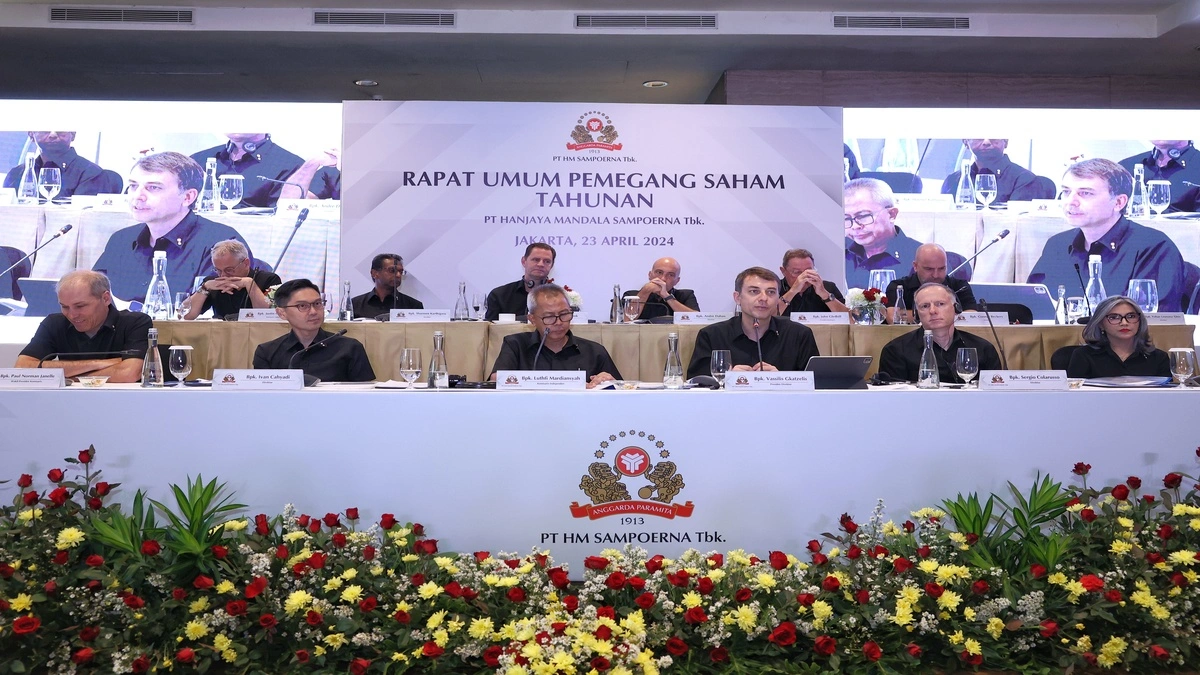
“Tahun 2023 menandai tahun kembalinya pertumbuhan profitabilitas yang kuat bagi Sampoerna, dengan pencapaian penting dalam pengembangan produk bebas asap berdasarkan pembuktian ilmiah, meningkatkan investasi dan lapangan kerja di Indonesia, serta menghasilkan efek berganda yang kuat, sejalan dengan prioritas negara untuk meningkatkan hilirisasi,” ungkap Presiden Direktur Sampoerna Vassilis Gkatzelis, pada Rapat Umum Pemegang Saham Tahunan (23/4/2024).

Saat ini, industri tembakau masih menghadapi tantangan-tantangan utama dengan kenaikan tarif cukai dua-digit yang signifikan di atas tingkat inflasi, kesenjangan cukai yang semakin besar antara segmen Volume Golongan 1 dan segmen Di Bawah Volume Golongan 1 yang dikenakan cukai lebih rendah, serta meningkatnya peredaran rokok ilegal. Secara keseluruhan, volume industri rokok nasional mengalami penurunan sebesar 4% dibandingkan 2022. Meskipun dalam kondisi yang penuh tantangan, penjualan bersih Sampoerna meningkat sebesar 4,3% menjadi Rp116,0 triliun, meskipun profitabilitas masih jauh di bawah tingkat sebelum pandemi.

Pada tahun 2023, produk bebas asap Sampoerna meraih pencapaian strategis. Di wilayah Perkotaan Jakarta, IQOS meraih pangsa pasar 3,5% pada kuartal keempat 2023, meningkat sebesar 2,0 poin dari kuartal keempat 2022. Perkotaan Jakarta mewakili Jakarta Barat, Pusat, dan Selatan yang mencakup sekitar 1,5 juta Pengguna Nikotin Dewasa.

Seiring dengan prioritas strategis untuk mempercepat komersialisasi produk tembakau inovatif bebas asap, Sampoerna juga menorehkan beberapa momen penting di tahun 2023, dimulai dari peresmian fasilitas produksi Karawang dan pelepasan ekspor perdana; diperkenalkannya inovasi terbaru IQOS ILUMA untuk secara eksklusif digunakan dengan batang tembakau TEREA; mulai beroperasinya Laboratorium Pengujian dan Analisis kelas dunia dengan fasilitas canggih untuk produk tembakau inovatif bebas asap di kuartal ketiga; dan disusul dengan diperkenalkannya batang tembakau TEREA edisi cengkih bagi perokok dewasa dan pengguna produk tembakau/nikotin dewasa di Indonesia.

IQOS ILUMA memanaskan batang tembakau yang menggunakan daun tembakau asli tanpa pembakaran. Seperti perangkat IQOS sebelumnya, IQOS ILUMA mengurangi paparan zat kimia berbahaya atau berpotensi berbahaya hingga rata-rata 90-95% lebih rendah dibandingkan dengan asap rokok. Meskipun tidak bebas risiko, produk tembakau inovatif bebas asap Philip Morris International (PMI) merupakan pilihan yang lebih baik bagi perokok dewasa yang memutuskan untuk terus menggunakan produk tembakau.

“Sampai dengan akhir tahun 2023, investasi kami pada produk bebas asap mencapai sekitar US$300 juta. Fasilitas produksi kami untuk produk tembakau bebas asap ialah yang pertama bagi PMI di Asia Tenggara dan yang ketujuh di dunia, serta difokuskan untuk ekspor ke kawasan Asia Pasifik maupun memenuhi permintaan pasar domestik yang sejalan dengan agenda hilirisasi pemerintah. Laboratorium Pengujian dan Analisis bagi produk tembakau inovatif bebas asap melibatkan lebih dari 200 ilmuwan Indonesia yang bertalenta dan merupakan bagian dari komitmen kami untuk menyerap tenaga kerja berketerampilan tinggi, khususnya dalam mendukung transformasi industri tembakau nasional,” papar Vassilis.

Sementara itu, kinerja segmen SKT menunjukan tanda pemulihan dengan pangsa pasar 28% pada tahun 2023 setelah mengalami tren penurunan pangsa pasar berkelanjutan dari 37% pada 2006 menjadi 17% pada tahun 2019. Hal ini didukung oleh kebijakan Pemerintah terkait cukai produk tembakau yang mempertimbangkan penyerapan tenaga kerja serta tembakau dan cengkih dari petani lokal.

Seiring dengan hal tersebut, Sampoerna menambah fasilitas produksi SKT dan Mitra Produksi Sigaret (MPS) pada awal tahun 2024 yang berdampak langsung pada penyerapan puluhan ribu tenaga kerja baru. Dengan penambahan tersebut, total tenaga kerja Sampoerna secara langsung dan tidak langsung menjadi lebih dari 90.000 orang.

“Memasuki 111 tahun Sampoerna berkiprah di Indonesia, kami terus konsisten berupaya berperan aktif dalam mendukung pertumbuhan ekonomi nasional melalui investasi jangka panjang, menciptakan nilai ekonomi di seluruh mata rantai industri, dan penyerapan tenaga kerja yang diharapkan dapat berkontribusi terhadap penciptaan efek berganda di Indonesia,” tutur Vassilis.

Pada Rapat Umum Pemegang Saham Tahunan hari ini, Perseroan mengumumkan total pembayaran dividen senilai Rp8,060 triliun dari saldo laba Perseroan untuk tahun buku yang berakhir pada 31 Desember 2023, dengan rasio pembayaran dividen sebesar 99,6% atau Rp69,3 per saham.

Presiden Direktur dan Direktur Baru

Selanjutnya, pada Rapat Umum Pemegang Saham Tahunan ini, para pemegang saham juga menyetujui penunjukkan Ivan Cahyadi sebagai Presiden Direktur Sampoerna yang baru, menggantikan Vassilis Gkatzelis, efektif per 1 Mei 2024, serta penunjukkan Yohan Lesmana sebagai Direktur Perseroan. Hal ini merupakan beberapa mata acara Rapat Umum Pemegang Saham Tahunan 2024 berikut dengan ralatnya yang telah disampaikan kepada Bursa Efek Indonesia (BEI) dan Otoritas Jasa Keuangan (OJK), secara berturut-turut, pada tanggal 1 dan 8 April 2024.

Presiden Komisaris Sampoerna John Gledhill mengatakan, “Vassilis berhasil memimpin Sampoerna untuk mencatatkan kinerja baik bagi Perseroan dalam dua tahun terakhir ini serta senantiasa mewujudkan komitmen untuk menciptakan nilai dan efek berganda bagi masyarakat luas. Saya ucapkan terima kasih kepada Vassilis atas kontribusinya di Sampoerna dan selamat untuk posisi barunya di PMI.”

PMI, induk perusahaan Sampoerna, memberikan kepercayaan bagi Vassilis untuk menduduki jabatan penting selanjutnya sebagai President East Asia, Australia & PMI Duty Free dan menjadi bagian dari Executive Leadership Team PMI yang dipimpin oleh CEO Jacek Olczak. Vassilis akan bertangung jawab atas pasar strategis PMI lainnya seperti Jepang, Korea Selatan, dan Tiongkok.

Posisi Presiden Direktur Sampoerna selanjutnya dipercayakan kepada Ivan Cahyadi yang memiliki pengalaman selama hampir tiga dekade di Sampoerna dan PMI. Ivan adalah sosok pemimpin yang tepat untuk terus memantapkan posisi Sampoerna sebagai pemimpin industri di Indonesia. “Dengan pengalaman yang ekstensif di Sampoerna, kami percaya Ivan adalah sosok pemimpin yang tepat bagi Sampoerna untuk memantapkan posisi Perseroan sebagai pemimpin industri di Indonesia dan meneruskan penciptaan efek berganda bagi semua pemangku kepentingan,” kata John.

Ivan Cahyadi bergabung dengan Sampoerna pada tahun 1996 sebagai Management Trainee dan mengembangkan kariernya dengan menduduki sejumlah posisi di Sampoerna, termasuk Manajer Pengembangan Organisasi (1999-2000), Manajer Market Inteligensia (2000-2004), Kepala Pengembangan Strategi Penjualan (2004-2005), Kepala Zona Penjualan (2005-2009). Ivan kemudian ditugaskan di afiliasi PMI di Malaysia sebagai Direktur Penjualan dan Distribusi pada tahun 2009. Ia kembali ke Sampoerna pada tahun 2010 sebagai Kepala Zona Penjualan, sebelum selanjutnya diangkat sebagai anggota Direksi pada 2016.

Sementara itu, terkait dengan pengangkatan Yohan Lesmana sebagai Direktur, “Yohan memiliki kemampuan mengartikulasikan visi dengan strategi yang kuat berbasis data, dan merupakan sosok dengan gaya kepemimpinan partisipatif. Pendekatan kolaboratif dan semangat untuk memberikan dampak yang dipadukan dengan kepedulian akan sangat bermanfaat dalam terus memperteguh posisi Sampoerna sebagai pemimpin pasar multi-kategori yang tak terbantahkan di Indonesia,” ujar John.

Yohan bergabung dengan Sampoerna pada tahun 2003 sebagai Graduate Trainee dan kariernya berkembang dengan mengemban berbagai peran penting di fungsi penjualan (Sales), termasuk Manajer Strategi Penjualan di Operating Center PMI pada tahun 2011 di Swiss dan Kepala Zona Penjualan pada tahun 2016 di Indonesia. Pada tahun 2019, Yohan dipercaya sebagai Kepala Transformasi Komersial, serta sebagai Direktur Penjualan & Distribusi Philip Morris Fortune Tobacco Corporation (PMFTC) pada 2021.

Tentang PT HM Sampoerna Tbk

Didirikan pada tahun 1913, Sampoerna – afiliasi dari Philip Morris International Inc. – adalah perusahaan tembakau terkemuka di Indonesia. Ruang lingkup kegiatan Perseroan terdiri dari usaha manufaktur dan perdagangan rokok serta produk tembakau bebas asap dan produk mengandung nikotin. Sampoerna memproduksi beberapa merek kretek terkenal seperti Sampoerna A, “Raja Kretek” legendaris Dji Sam Soe, dan Sampoerna Kretek.

Sampoerna juga mendistribusikan produk rokok merek Marlboro ke seluruh Indonesia melalui perjanjian distribusi jangka panjang dengan PT Philip Morris Indonesia. Sampoerna mengoperasikan tujuh fasilitas produksi yang berlokasi di Surabaya, Pasuruan, Probolinggo, Malang, Karawang, Blitar dan Tegal, termasuk fasilitas manufaktur untuk produk tembakau inovatif bebas asap dengan fokus ekspor ke Asia Pasifik dan pasar domestik.

Sampoerna juga bermitra dengan 43 Mitra Produksi Sigaret di seluruh Jawa, yang mempekerjakan – secara langsung dan tidak langsung – lebih dari 90.000 karyawan, sebagian besar dalam produksi sigaret kretek tangan. Sampoerna mendistribusikan produknya melalui 109 kantor penjualan dan kantor distribusi wilayah di seluruh Indonesia. Sampoerna merupakan salah satu emiten di Bursa Efek Indonesia.

Saham Sampoerna diperdagangkan dengan kode saham “HMSP”.

Informasi lebih lanjut, kunjungi: www.sampoerna.com

Press Release ini juga sudah tayang di VRITIMES

Berita Terkait

Boost asset performance, cut downtime, and stay ahead of competitors with PetroSync Reliability & Maintenance training for business leaders. In today’s competitive industrial landscape, asset performance is no longer a technical concern—it is a business imperative. If your competitors can maintain higher equipment availability, reduce downtime, and respond faster to failures, they gain an advantage that directly affects market share, profitability, and customer trust. As a business leader, you may already sense this pressure. The uncomfortable question is not whether reliability matters, but whether your organization is moving fast enough. When Your Competitors Fix Assets Faster Than You Can Imagine two companies operating similar assets in the same market. One experiences frequent unplanned shutdowns, while the other maintains steady production with minimal disruption. The difference is rarely luck—it is capability. Organizations that invest in reliability and maintenance competencies empower their teams to detect issues earlier, prioritize the right tasks, and execute maintenance with precision. Studies consistently show that mature reliability programs can improve maintenance productivity by 15–25%, simply by reducing reactive work and improving planning accuracy. While your team struggles with fire-fighting mode, competitors with structured reliability frameworks move faster, recover quicker, and deliver more consistent output. Over time, that performance gap becomes impossible to ignore. The Hidden Cost of “Business as Usual” in Reliability and Maintenance Many companies underestimate the cost of maintaining the status quo. On the surface, operations may appear stable—but beneath it lies inefficiency. Unoptimized maintenance strategies often lead to: Excessive overtime and labor waste Spare parts overstocking or critical shortages Repeated failures that erode asset life According to industry benchmarks, poor maintenance practices can consume up to 30% of total operating costs. Meanwhile, organizations that adopt reliability-centered approaches typically achieve 10–20% operational efficiency improvements, freeing capital for growth rather than repairs. If competitors are already operating leaner and smarter, continuing “business as usual” is not neutral—it is a risk. How Smart Reliability Leaders Turn Technology Into a Competitive Weapon Forward-thinking leaders understand that reliability excellence is no longer driven by people alone—it is amplified by technology. AI-powered maintenance tools, including intelligent chatbots, are increasingly used to support frontline teams. These systems help technicians access procedures, historical failure data, and troubleshooting guidance instantly. The result is faster decision-making, fewer errors, and reduced dependency on limited expert resources. Organizations implementing AI-assisted maintenance solutions report: Faster issue resolution and improved team productivity Reduced training time for new technicians Operational cost savings of up to 20–30% by minimizing downtime and unnecessary interventions However, technology only delivers value when paired with strong reliability fundamentals. This is where professional capability development becomes critical. Programs such as CMRP Training and CRE Training equip professionals with the strategic and analytical skills needed to turn tools and data into real performance gains. Staying Relevant in an Era Where Asset Performance Defines Market Winners The reality is simple: markets reward organizations that can sustain asset performance under pressure. Those that fail to evolve risk falling behind—not because they lack assets, but because they lack reliability leadership. Reliability-centered methodologies help businesses shift from reactive maintenance to structured decision-making. Programs like ARCM Training enable teams to align maintenance activities with business risk, ensuring resources are focused where they matter most. Meanwhile, RCA Training helps organizations break the cycle of recurring failures that quietly drain profitability. For business leaders, investing in reliability and maintenance capability is not just about equipment—it is about protecting competitiveness. When your competitors can deliver faster, cheaper, and more reliably, the cost of inaction becomes far greater than the cost of transformation. About PetroSync Global Internasional PetroSync was established in Singapore in 2010 and began its expansion into Indonesia in 2013. To this day, PetroSync has become a leading oil and gas training provider, with a participant passing rate as high as 90%. This Press Release has also been published on VRITIMES
Duo Machineast Malaysia Tampil di BINUS @Medan, Dari Tipografi Kinetik ke Media Digital
KAI Logistik Pastikan Kesiapan Layanan Hadapi Angkutan Natal dan Tahun Baru 2025/2026
KAI Logistik Optimalkan KA Kontainer Reefer, Jaga Distribusi Pangan Segar Selama Natal dan Tahun Baru
Tingkatkan Keselamatan dan Kelancaran Perjalanan Kereta Api, KAI Daop 2 Bandung Lakukan Penggantian Rel dan Wesel KA di Sejumlah Titik
Natal dan Tahun Baru Aman, Wakil MUI Sekaligus Ketua FKUB DKI Jakarta Apresiasi Polri
BRI Region 6/Jakarta 1 Rayakan HUT ke-130 dengan Tumpengan dan Penghargaan
Dorong Masyarakat Gunakan Transportasi Umum saat Libur Akhir Tahun, KAI Terapkan Tarif Akhir Pekan pada Layanan LRT Jabodebek

Berita Terbaru

Event

Boost asset performance, cut downtime, and stay ahead of competitors with PetroSync Reliability & Maintenance training for business leaders. In today’s competitive industrial landscape, asset performance is no longer a technical concern—it is a business imperative. If your competitors can maintain higher equipment availability, reduce downtime, and respond faster to failures, they gain an advantage that directly affects market share, profitability, and customer trust. As a business leader, you may already sense this pressure. The uncomfortable question is not whether reliability matters, but whether your organization is moving fast enough. When Your Competitors Fix Assets Faster Than You Can Imagine two companies operating similar assets in the same market. One experiences frequent unplanned shutdowns, while the other maintains steady production with minimal disruption. The difference is rarely luck—it is capability. Organizations that invest in reliability and maintenance competencies empower their teams to detect issues earlier, prioritize the right tasks, and execute maintenance with precision. Studies consistently show that mature reliability programs can improve maintenance productivity by 15–25%, simply by reducing reactive work and improving planning accuracy. While your team struggles with fire-fighting mode, competitors with structured reliability frameworks move faster, recover quicker, and deliver more consistent output. Over time, that performance gap becomes impossible to ignore. The Hidden Cost of “Business as Usual” in Reliability and Maintenance Many companies underestimate the cost of maintaining the status quo. On the surface, operations may appear stable—but beneath it lies inefficiency. Unoptimized maintenance strategies often lead to: Excessive overtime and labor waste Spare parts overstocking or critical shortages Repeated failures that erode asset life According to industry benchmarks, poor maintenance practices can consume up to 30% of total operating costs. Meanwhile, organizations that adopt reliability-centered approaches typically achieve 10–20% operational efficiency improvements, freeing capital for growth rather than repairs. If competitors are already operating leaner and smarter, continuing “business as usual” is not neutral—it is a risk. How Smart Reliability Leaders Turn Technology Into a Competitive Weapon Forward-thinking leaders understand that reliability excellence is no longer driven by people alone—it is amplified by technology. AI-powered maintenance tools, including intelligent chatbots, are increasingly used to support frontline teams. These systems help technicians access procedures, historical failure data, and troubleshooting guidance instantly. The result is faster decision-making, fewer errors, and reduced dependency on limited expert resources. Organizations implementing AI-assisted maintenance solutions report: Faster issue resolution and improved team productivity Reduced training time for new technicians Operational cost savings of up to 20–30% by minimizing downtime and unnecessary interventions However, technology only delivers value when paired with strong reliability fundamentals. This is where professional capability development becomes critical. Programs such as CMRP Training and CRE Training equip professionals with the strategic and analytical skills needed to turn tools and data into real performance gains. Staying Relevant in an Era Where Asset Performance Defines Market Winners The reality is simple: markets reward organizations that can sustain asset performance under pressure. Those that fail to evolve risk falling behind—not because they lack assets, but because they lack reliability leadership. Reliability-centered methodologies help businesses shift from reactive maintenance to structured decision-making. Programs like ARCM Training enable teams to align maintenance activities with business risk, ensuring resources are focused where they matter most. Meanwhile, RCA Training helps organizations break the cycle of recurring failures that quietly drain profitability. For business leaders, investing in reliability and maintenance capability is not just about equipment—it is about protecting competitiveness. When your competitors can deliver faster, cheaper, and more reliably, the cost of inaction becomes far greater than the cost of transformation. About PetroSync Global Internasional PetroSync was established in Singapore in 2010 and began its expansion into Indonesia in 2013. To this day, PetroSync has become a leading oil and gas training provider, with a participant passing rate as high as 90%. This Press Release has also been published on VRITIMES

Berita Terkait

Jumat, 2 Januari 2026 - 20:35

Boost asset performance, cut downtime, and stay ahead of competitors with PetroSync Reliability & Maintenance training for business leaders. In today’s competitive industrial landscape, asset performance is no longer a technical concern—it is a business imperative. If your competitors can maintain higher equipment availability, reduce downtime, and respond faster to failures, they gain an advantage that directly affects market share, profitability, and customer trust. As a business leader, you may already sense this pressure. The uncomfortable question is not whether reliability matters, but whether your organization is moving fast enough. When Your Competitors Fix Assets Faster Than You Can Imagine two companies operating similar assets in the same market. One experiences frequent unplanned shutdowns, while the other maintains steady production with minimal disruption. The difference is rarely luck—it is capability. Organizations that invest in reliability and maintenance competencies empower their teams to detect issues earlier, prioritize the right tasks, and execute maintenance with precision. Studies consistently show that mature reliability programs can improve maintenance productivity by 15–25%, simply by reducing reactive work and improving planning accuracy. While your team struggles with fire-fighting mode, competitors with structured reliability frameworks move faster, recover quicker, and deliver more consistent output. Over time, that performance gap becomes impossible to ignore. The Hidden Cost of “Business as Usual” in Reliability and Maintenance Many companies underestimate the cost of maintaining the status quo. On the surface, operations may appear stable—but beneath it lies inefficiency. Unoptimized maintenance strategies often lead to: Excessive overtime and labor waste Spare parts overstocking or critical shortages Repeated failures that erode asset life According to industry benchmarks, poor maintenance practices can consume up to 30% of total operating costs. Meanwhile, organizations that adopt reliability-centered approaches typically achieve 10–20% operational efficiency improvements, freeing capital for growth rather than repairs. If competitors are already operating leaner and smarter, continuing “business as usual” is not neutral—it is a risk. How Smart Reliability Leaders Turn Technology Into a Competitive Weapon Forward-thinking leaders understand that reliability excellence is no longer driven by people alone—it is amplified by technology. AI-powered maintenance tools, including intelligent chatbots, are increasingly used to support frontline teams. These systems help technicians access procedures, historical failure data, and troubleshooting guidance instantly. The result is faster decision-making, fewer errors, and reduced dependency on limited expert resources. Organizations implementing AI-assisted maintenance solutions report: Faster issue resolution and improved team productivity Reduced training time for new technicians Operational cost savings of up to 20–30% by minimizing downtime and unnecessary interventions However, technology only delivers value when paired with strong reliability fundamentals. This is where professional capability development becomes critical. Programs such as CMRP Training and CRE Training equip professionals with the strategic and analytical skills needed to turn tools and data into real performance gains. Staying Relevant in an Era Where Asset Performance Defines Market Winners The reality is simple: markets reward organizations that can sustain asset performance under pressure. Those that fail to evolve risk falling behind—not because they lack assets, but because they lack reliability leadership. Reliability-centered methodologies help businesses shift from reactive maintenance to structured decision-making. Programs like ARCM Training enable teams to align maintenance activities with business risk, ensuring resources are focused where they matter most. Meanwhile, RCA Training helps organizations break the cycle of recurring failures that quietly drain profitability. For business leaders, investing in reliability and maintenance capability is not just about equipment—it is about protecting competitiveness. When your competitors can deliver faster, cheaper, and more reliably, the cost of inaction becomes far greater than the cost of transformation. About PetroSync Global Internasional PetroSync was established in Singapore in 2010 and began its expansion into Indonesia in 2013. To this day, PetroSync has become a leading oil and gas training provider, with a participant passing rate as high as 90%. This Press Release has also been published on VRITIMES

Jumat, 2 Januari 2026 - 17:09

Duo Machineast Malaysia Tampil di BINUS @Medan, Dari Tipografi Kinetik ke Media Digital

Jumat, 2 Januari 2026 - 11:25

KAI Logistik Pastikan Kesiapan Layanan Hadapi Angkutan Natal dan Tahun Baru 2025/2026

Jumat, 2 Januari 2026 - 09:34

KAI Logistik Optimalkan KA Kontainer Reefer, Jaga Distribusi Pangan Segar Selama Natal dan Tahun Baru

Kamis, 1 Januari 2026 - 20:53

Tingkatkan Keselamatan dan Kelancaran Perjalanan Kereta Api, KAI Daop 2 Bandung Lakukan Penggantian Rel dan Wesel KA di Sejumlah Titik

Berita Terbaru

Event

Boost asset performance, cut downtime, and stay ahead of competitors with PetroSync Reliability & Maintenance training for business leaders. In today’s competitive industrial landscape, asset performance is no longer a technical concern—it is a business imperative. If your competitors can maintain higher equipment availability, reduce downtime, and respond faster to failures, they gain an advantage that directly affects market share, profitability, and customer trust. As a business leader, you may already sense this pressure. The uncomfortable question is not whether reliability matters, but whether your organization is moving fast enough. When Your Competitors Fix Assets Faster Than You Can Imagine two companies operating similar assets in the same market. One experiences frequent unplanned shutdowns, while the other maintains steady production with minimal disruption. The difference is rarely luck—it is capability. Organizations that invest in reliability and maintenance competencies empower their teams to detect issues earlier, prioritize the right tasks, and execute maintenance with precision. Studies consistently show that mature reliability programs can improve maintenance productivity by 15–25%, simply by reducing reactive work and improving planning accuracy. While your team struggles with fire-fighting mode, competitors with structured reliability frameworks move faster, recover quicker, and deliver more consistent output. Over time, that performance gap becomes impossible to ignore. The Hidden Cost of “Business as Usual” in Reliability and Maintenance Many companies underestimate the cost of maintaining the status quo. On the surface, operations may appear stable—but beneath it lies inefficiency. Unoptimized maintenance strategies often lead to: Excessive overtime and labor waste Spare parts overstocking or critical shortages Repeated failures that erode asset life According to industry benchmarks, poor maintenance practices can consume up to 30% of total operating costs. Meanwhile, organizations that adopt reliability-centered approaches typically achieve 10–20% operational efficiency improvements, freeing capital for growth rather than repairs. If competitors are already operating leaner and smarter, continuing “business as usual” is not neutral—it is a risk. How Smart Reliability Leaders Turn Technology Into a Competitive Weapon Forward-thinking leaders understand that reliability excellence is no longer driven by people alone—it is amplified by technology. AI-powered maintenance tools, including intelligent chatbots, are increasingly used to support frontline teams. These systems help technicians access procedures, historical failure data, and troubleshooting guidance instantly. The result is faster decision-making, fewer errors, and reduced dependency on limited expert resources. Organizations implementing AI-assisted maintenance solutions report: Faster issue resolution and improved team productivity Reduced training time for new technicians Operational cost savings of up to 20–30% by minimizing downtime and unnecessary interventions However, technology only delivers value when paired with strong reliability fundamentals. This is where professional capability development becomes critical. Programs such as CMRP Training and CRE Training equip professionals with the strategic and analytical skills needed to turn tools and data into real performance gains. Staying Relevant in an Era Where Asset Performance Defines Market Winners The reality is simple: markets reward organizations that can sustain asset performance under pressure. Those that fail to evolve risk falling behind—not because they lack assets, but because they lack reliability leadership. Reliability-centered methodologies help businesses shift from reactive maintenance to structured decision-making. Programs like ARCM Training enable teams to align maintenance activities with business risk, ensuring resources are focused where they matter most. Meanwhile, RCA Training helps organizations break the cycle of recurring failures that quietly drain profitability. For business leaders, investing in reliability and maintenance capability is not just about equipment—it is about protecting competitiveness. When your competitors can deliver faster, cheaper, and more reliably, the cost of inaction becomes far greater than the cost of transformation. About PetroSync Global Internasional PetroSync was established in Singapore in 2010 and began its expansion into Indonesia in 2013. To this day, PetroSync has become a leading oil and gas training provider, with a participant passing rate as high as 90%. This Press Release has also been published on VRITIMES

Jumat, 2 Jan 2026 - 20:35