Companies, stop striving for zero complaints

vritimes

Rabu, 2 Oktober 2024

facebook twitter whatsapp telegram line copy

URL berhasil dicopy

facebook icon twitter icon whatsapp icon telegram icon line icon copy

URL berhasil dicopy

Your customers’ complaints could be the goldmine you’re overlooking.

“We want zero complaints,” says every company in the world. But what if complaints are the secret competitive advantage your business needs?

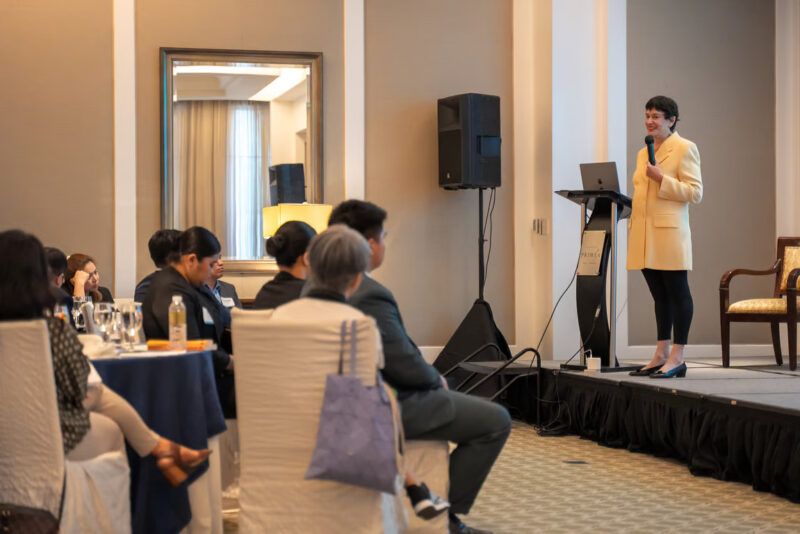
“Complaints offer an intimate way of understanding your business through the eyes of your customers,” Dr. Janelle Barlow, President of All Out Performance and author of A Complaint is a Gift, said during her talk, Turning Critics into Advocates hosted by Management Strategies on September 23, 2024, at Discovery Primea, Makati. The event explored a radical idea: complaints can be your greatest source of insight and revenue, if only companies dared to listen.

And listen they did. Senior management who attended the event came from private foundations, telecommunications, finance, real estate and hospitality industries.

Silence is worse

If complaints aren’t bad news for companies, why don’t more customers speak up?

Many don’t think anything will get done, or the situation could worsen further. Dr. Barlow shared an anecdote about people being afraid to complain to their doctors, worrying that voicing their concerns might lead to worse treatment.

The same logic applies in business: silence from customers can be far more dangerous than complaints. These are the customers who simply walk away–the 50% you’ll never see again.

But, here’s the twist: 60-70% of customers who have their complaints resolved satisfactorily go on to buy five times more than they initially would have.

“If you solve their concerns instead of over-apologizing, they’ll actually come back to repurchase five times more,” Dr. Barlow said. “This is the power of complaint handling in the language of revenue and results.”

Everyone owns the complaint

Only 1 in 10,000 written complaints ever make their way to senior management. In the US, companies are losing 1 trillion dollars due to poor complaint handling.  

Dr. Barlow emphasized the need to break down silos. Businesses must instead foster a culture where everyone feels responsible for addressing customer concerns.  

Too often, companies are laser-focused on acquiring new customers, missing the retention goldmine. 

Retaining existing customers is significantly cheaper than attracting new ones. And the rewards are exponential. A small increase in retention can lead to a dramatic uptick in profits.

“Most companies spend half of their revenue attracting new customers,” Dr. Barlow revealed. “But retaining even just 5% of your customers can lead to up to 95% profit increase.”

Turning critics into advocates

So what can businesses do in face of complaints? Dr. Barlow suggests three power tools that will turn even the worst critics into staunch advocates.

First, widen your customers’ tolerance zone. “When customers feel understood and valued, they are far more forgiving,” Dr. Barlow explained. A little friendliness and empathy go a long way in easing tensions and getting customers on your side. Instead of reacting defensively, aim to create an environment where your customers feel heard. 

Next, speed. “Above all, what customers want from service is responsiveness,” Dr. Barlow emphasized. Quick resolutions show that you value their time and concerns. When you act swiftly, you not only diffuse anger but also demonstrate your company’s commitment to resolving problems. 

Big data can speed up resolution. “Access to every data point can address the root cause of customer complaints and understand them beyond face value.”

Finally, fairness is more important than you realize. Customers aren’t just looking for their problem to be solved—they want it handled fairly. When your solution feels balanced and just, customers are more likely to leave with a positive impression, even if things didn’t start off smoothly. 

Behind every complaint is a gift. The question is: Are you ready to unwrap it?

About MANAGEMENT STRATEGIES

Management Strategies is a global consulting firm specializing in culture building and organizational transformation.

Today, with over 50 passionate consultants and coaches worldwide, the company continues to focus on bringing out the best in people and activating their purpose and strengths. For more information on the company and their services, visit their website at www.mgtstrat-asia.com

This press release has also been published on VRITIMES

Berita Terkait

Boost asset performance, cut downtime, and stay ahead of competitors with PetroSync Reliability & Maintenance training for business leaders. In today’s competitive industrial landscape, asset performance is no longer a technical concern—it is a business imperative. If your competitors can maintain higher equipment availability, reduce downtime, and respond faster to failures, they gain an advantage that directly affects market share, profitability, and customer trust. As a business leader, you may already sense this pressure. The uncomfortable question is not whether reliability matters, but whether your organization is moving fast enough. When Your Competitors Fix Assets Faster Than You Can Imagine two companies operating similar assets in the same market. One experiences frequent unplanned shutdowns, while the other maintains steady production with minimal disruption. The difference is rarely luck—it is capability. Organizations that invest in reliability and maintenance competencies empower their teams to detect issues earlier, prioritize the right tasks, and execute maintenance with precision. Studies consistently show that mature reliability programs can improve maintenance productivity by 15–25%, simply by reducing reactive work and improving planning accuracy. While your team struggles with fire-fighting mode, competitors with structured reliability frameworks move faster, recover quicker, and deliver more consistent output. Over time, that performance gap becomes impossible to ignore. The Hidden Cost of “Business as Usual” in Reliability and Maintenance Many companies underestimate the cost of maintaining the status quo. On the surface, operations may appear stable—but beneath it lies inefficiency. Unoptimized maintenance strategies often lead to: Excessive overtime and labor waste Spare parts overstocking or critical shortages Repeated failures that erode asset life According to industry benchmarks, poor maintenance practices can consume up to 30% of total operating costs. Meanwhile, organizations that adopt reliability-centered approaches typically achieve 10–20% operational efficiency improvements, freeing capital for growth rather than repairs. If competitors are already operating leaner and smarter, continuing “business as usual” is not neutral—it is a risk. How Smart Reliability Leaders Turn Technology Into a Competitive Weapon Forward-thinking leaders understand that reliability excellence is no longer driven by people alone—it is amplified by technology. AI-powered maintenance tools, including intelligent chatbots, are increasingly used to support frontline teams. These systems help technicians access procedures, historical failure data, and troubleshooting guidance instantly. The result is faster decision-making, fewer errors, and reduced dependency on limited expert resources. Organizations implementing AI-assisted maintenance solutions report: Faster issue resolution and improved team productivity Reduced training time for new technicians Operational cost savings of up to 20–30% by minimizing downtime and unnecessary interventions However, technology only delivers value when paired with strong reliability fundamentals. This is where professional capability development becomes critical. Programs such as CMRP Training and CRE Training equip professionals with the strategic and analytical skills needed to turn tools and data into real performance gains. Staying Relevant in an Era Where Asset Performance Defines Market Winners The reality is simple: markets reward organizations that can sustain asset performance under pressure. Those that fail to evolve risk falling behind—not because they lack assets, but because they lack reliability leadership. Reliability-centered methodologies help businesses shift from reactive maintenance to structured decision-making. Programs like ARCM Training enable teams to align maintenance activities with business risk, ensuring resources are focused where they matter most. Meanwhile, RCA Training helps organizations break the cycle of recurring failures that quietly drain profitability. For business leaders, investing in reliability and maintenance capability is not just about equipment—it is about protecting competitiveness. When your competitors can deliver faster, cheaper, and more reliably, the cost of inaction becomes far greater than the cost of transformation. About PetroSync Global Internasional PetroSync was established in Singapore in 2010 and began its expansion into Indonesia in 2013. To this day, PetroSync has become a leading oil and gas training provider, with a participant passing rate as high as 90%. This Press Release has also been published on VRITIMES
Duo Machineast Malaysia Tampil di BINUS @Medan, Dari Tipografi Kinetik ke Media Digital
KAI Logistik Pastikan Kesiapan Layanan Hadapi Angkutan Natal dan Tahun Baru 2025/2026
KAI Logistik Optimalkan KA Kontainer Reefer, Jaga Distribusi Pangan Segar Selama Natal dan Tahun Baru
Tingkatkan Keselamatan dan Kelancaran Perjalanan Kereta Api, KAI Daop 2 Bandung Lakukan Penggantian Rel dan Wesel KA di Sejumlah Titik
Natal dan Tahun Baru Aman, Wakil MUI Sekaligus Ketua FKUB DKI Jakarta Apresiasi Polri
BRI Region 6/Jakarta 1 Rayakan HUT ke-130 dengan Tumpengan dan Penghargaan
Dorong Masyarakat Gunakan Transportasi Umum saat Libur Akhir Tahun, KAI Terapkan Tarif Akhir Pekan pada Layanan LRT Jabodebek

Berita Terbaru

Event

Boost asset performance, cut downtime, and stay ahead of competitors with PetroSync Reliability & Maintenance training for business leaders. In today’s competitive industrial landscape, asset performance is no longer a technical concern—it is a business imperative. If your competitors can maintain higher equipment availability, reduce downtime, and respond faster to failures, they gain an advantage that directly affects market share, profitability, and customer trust. As a business leader, you may already sense this pressure. The uncomfortable question is not whether reliability matters, but whether your organization is moving fast enough. When Your Competitors Fix Assets Faster Than You Can Imagine two companies operating similar assets in the same market. One experiences frequent unplanned shutdowns, while the other maintains steady production with minimal disruption. The difference is rarely luck—it is capability. Organizations that invest in reliability and maintenance competencies empower their teams to detect issues earlier, prioritize the right tasks, and execute maintenance with precision. Studies consistently show that mature reliability programs can improve maintenance productivity by 15–25%, simply by reducing reactive work and improving planning accuracy. While your team struggles with fire-fighting mode, competitors with structured reliability frameworks move faster, recover quicker, and deliver more consistent output. Over time, that performance gap becomes impossible to ignore. The Hidden Cost of “Business as Usual” in Reliability and Maintenance Many companies underestimate the cost of maintaining the status quo. On the surface, operations may appear stable—but beneath it lies inefficiency. Unoptimized maintenance strategies often lead to: Excessive overtime and labor waste Spare parts overstocking or critical shortages Repeated failures that erode asset life According to industry benchmarks, poor maintenance practices can consume up to 30% of total operating costs. Meanwhile, organizations that adopt reliability-centered approaches typically achieve 10–20% operational efficiency improvements, freeing capital for growth rather than repairs. If competitors are already operating leaner and smarter, continuing “business as usual” is not neutral—it is a risk. How Smart Reliability Leaders Turn Technology Into a Competitive Weapon Forward-thinking leaders understand that reliability excellence is no longer driven by people alone—it is amplified by technology. AI-powered maintenance tools, including intelligent chatbots, are increasingly used to support frontline teams. These systems help technicians access procedures, historical failure data, and troubleshooting guidance instantly. The result is faster decision-making, fewer errors, and reduced dependency on limited expert resources. Organizations implementing AI-assisted maintenance solutions report: Faster issue resolution and improved team productivity Reduced training time for new technicians Operational cost savings of up to 20–30% by minimizing downtime and unnecessary interventions However, technology only delivers value when paired with strong reliability fundamentals. This is where professional capability development becomes critical. Programs such as CMRP Training and CRE Training equip professionals with the strategic and analytical skills needed to turn tools and data into real performance gains. Staying Relevant in an Era Where Asset Performance Defines Market Winners The reality is simple: markets reward organizations that can sustain asset performance under pressure. Those that fail to evolve risk falling behind—not because they lack assets, but because they lack reliability leadership. Reliability-centered methodologies help businesses shift from reactive maintenance to structured decision-making. Programs like ARCM Training enable teams to align maintenance activities with business risk, ensuring resources are focused where they matter most. Meanwhile, RCA Training helps organizations break the cycle of recurring failures that quietly drain profitability. For business leaders, investing in reliability and maintenance capability is not just about equipment—it is about protecting competitiveness. When your competitors can deliver faster, cheaper, and more reliably, the cost of inaction becomes far greater than the cost of transformation. About PetroSync Global Internasional PetroSync was established in Singapore in 2010 and began its expansion into Indonesia in 2013. To this day, PetroSync has become a leading oil and gas training provider, with a participant passing rate as high as 90%. This Press Release has also been published on VRITIMES

Berita Terkait

Jumat, 2 Januari 2026 - 20:35

Boost asset performance, cut downtime, and stay ahead of competitors with PetroSync Reliability & Maintenance training for business leaders. In today’s competitive industrial landscape, asset performance is no longer a technical concern—it is a business imperative. If your competitors can maintain higher equipment availability, reduce downtime, and respond faster to failures, they gain an advantage that directly affects market share, profitability, and customer trust. As a business leader, you may already sense this pressure. The uncomfortable question is not whether reliability matters, but whether your organization is moving fast enough. When Your Competitors Fix Assets Faster Than You Can Imagine two companies operating similar assets in the same market. One experiences frequent unplanned shutdowns, while the other maintains steady production with minimal disruption. The difference is rarely luck—it is capability. Organizations that invest in reliability and maintenance competencies empower their teams to detect issues earlier, prioritize the right tasks, and execute maintenance with precision. Studies consistently show that mature reliability programs can improve maintenance productivity by 15–25%, simply by reducing reactive work and improving planning accuracy. While your team struggles with fire-fighting mode, competitors with structured reliability frameworks move faster, recover quicker, and deliver more consistent output. Over time, that performance gap becomes impossible to ignore. The Hidden Cost of “Business as Usual” in Reliability and Maintenance Many companies underestimate the cost of maintaining the status quo. On the surface, operations may appear stable—but beneath it lies inefficiency. Unoptimized maintenance strategies often lead to: Excessive overtime and labor waste Spare parts overstocking or critical shortages Repeated failures that erode asset life According to industry benchmarks, poor maintenance practices can consume up to 30% of total operating costs. Meanwhile, organizations that adopt reliability-centered approaches typically achieve 10–20% operational efficiency improvements, freeing capital for growth rather than repairs. If competitors are already operating leaner and smarter, continuing “business as usual” is not neutral—it is a risk. How Smart Reliability Leaders Turn Technology Into a Competitive Weapon Forward-thinking leaders understand that reliability excellence is no longer driven by people alone—it is amplified by technology. AI-powered maintenance tools, including intelligent chatbots, are increasingly used to support frontline teams. These systems help technicians access procedures, historical failure data, and troubleshooting guidance instantly. The result is faster decision-making, fewer errors, and reduced dependency on limited expert resources. Organizations implementing AI-assisted maintenance solutions report: Faster issue resolution and improved team productivity Reduced training time for new technicians Operational cost savings of up to 20–30% by minimizing downtime and unnecessary interventions However, technology only delivers value when paired with strong reliability fundamentals. This is where professional capability development becomes critical. Programs such as CMRP Training and CRE Training equip professionals with the strategic and analytical skills needed to turn tools and data into real performance gains. Staying Relevant in an Era Where Asset Performance Defines Market Winners The reality is simple: markets reward organizations that can sustain asset performance under pressure. Those that fail to evolve risk falling behind—not because they lack assets, but because they lack reliability leadership. Reliability-centered methodologies help businesses shift from reactive maintenance to structured decision-making. Programs like ARCM Training enable teams to align maintenance activities with business risk, ensuring resources are focused where they matter most. Meanwhile, RCA Training helps organizations break the cycle of recurring failures that quietly drain profitability. For business leaders, investing in reliability and maintenance capability is not just about equipment—it is about protecting competitiveness. When your competitors can deliver faster, cheaper, and more reliably, the cost of inaction becomes far greater than the cost of transformation. About PetroSync Global Internasional PetroSync was established in Singapore in 2010 and began its expansion into Indonesia in 2013. To this day, PetroSync has become a leading oil and gas training provider, with a participant passing rate as high as 90%. This Press Release has also been published on VRITIMES

Jumat, 2 Januari 2026 - 17:09

Duo Machineast Malaysia Tampil di BINUS @Medan, Dari Tipografi Kinetik ke Media Digital

Jumat, 2 Januari 2026 - 11:25

KAI Logistik Pastikan Kesiapan Layanan Hadapi Angkutan Natal dan Tahun Baru 2025/2026

Jumat, 2 Januari 2026 - 09:34

KAI Logistik Optimalkan KA Kontainer Reefer, Jaga Distribusi Pangan Segar Selama Natal dan Tahun Baru

Kamis, 1 Januari 2026 - 20:53

Tingkatkan Keselamatan dan Kelancaran Perjalanan Kereta Api, KAI Daop 2 Bandung Lakukan Penggantian Rel dan Wesel KA di Sejumlah Titik

Berita Terbaru

Event

Boost asset performance, cut downtime, and stay ahead of competitors with PetroSync Reliability & Maintenance training for business leaders. In today’s competitive industrial landscape, asset performance is no longer a technical concern—it is a business imperative. If your competitors can maintain higher equipment availability, reduce downtime, and respond faster to failures, they gain an advantage that directly affects market share, profitability, and customer trust. As a business leader, you may already sense this pressure. The uncomfortable question is not whether reliability matters, but whether your organization is moving fast enough. When Your Competitors Fix Assets Faster Than You Can Imagine two companies operating similar assets in the same market. One experiences frequent unplanned shutdowns, while the other maintains steady production with minimal disruption. The difference is rarely luck—it is capability. Organizations that invest in reliability and maintenance competencies empower their teams to detect issues earlier, prioritize the right tasks, and execute maintenance with precision. Studies consistently show that mature reliability programs can improve maintenance productivity by 15–25%, simply by reducing reactive work and improving planning accuracy. While your team struggles with fire-fighting mode, competitors with structured reliability frameworks move faster, recover quicker, and deliver more consistent output. Over time, that performance gap becomes impossible to ignore. The Hidden Cost of “Business as Usual” in Reliability and Maintenance Many companies underestimate the cost of maintaining the status quo. On the surface, operations may appear stable—but beneath it lies inefficiency. Unoptimized maintenance strategies often lead to: Excessive overtime and labor waste Spare parts overstocking or critical shortages Repeated failures that erode asset life According to industry benchmarks, poor maintenance practices can consume up to 30% of total operating costs. Meanwhile, organizations that adopt reliability-centered approaches typically achieve 10–20% operational efficiency improvements, freeing capital for growth rather than repairs. If competitors are already operating leaner and smarter, continuing “business as usual” is not neutral—it is a risk. How Smart Reliability Leaders Turn Technology Into a Competitive Weapon Forward-thinking leaders understand that reliability excellence is no longer driven by people alone—it is amplified by technology. AI-powered maintenance tools, including intelligent chatbots, are increasingly used to support frontline teams. These systems help technicians access procedures, historical failure data, and troubleshooting guidance instantly. The result is faster decision-making, fewer errors, and reduced dependency on limited expert resources. Organizations implementing AI-assisted maintenance solutions report: Faster issue resolution and improved team productivity Reduced training time for new technicians Operational cost savings of up to 20–30% by minimizing downtime and unnecessary interventions However, technology only delivers value when paired with strong reliability fundamentals. This is where professional capability development becomes critical. Programs such as CMRP Training and CRE Training equip professionals with the strategic and analytical skills needed to turn tools and data into real performance gains. Staying Relevant in an Era Where Asset Performance Defines Market Winners The reality is simple: markets reward organizations that can sustain asset performance under pressure. Those that fail to evolve risk falling behind—not because they lack assets, but because they lack reliability leadership. Reliability-centered methodologies help businesses shift from reactive maintenance to structured decision-making. Programs like ARCM Training enable teams to align maintenance activities with business risk, ensuring resources are focused where they matter most. Meanwhile, RCA Training helps organizations break the cycle of recurring failures that quietly drain profitability. For business leaders, investing in reliability and maintenance capability is not just about equipment—it is about protecting competitiveness. When your competitors can deliver faster, cheaper, and more reliably, the cost of inaction becomes far greater than the cost of transformation. About PetroSync Global Internasional PetroSync was established in Singapore in 2010 and began its expansion into Indonesia in 2013. To this day, PetroSync has become a leading oil and gas training provider, with a participant passing rate as high as 90%. This Press Release has also been published on VRITIMES

Jumat, 2 Jan 2026 - 20:35