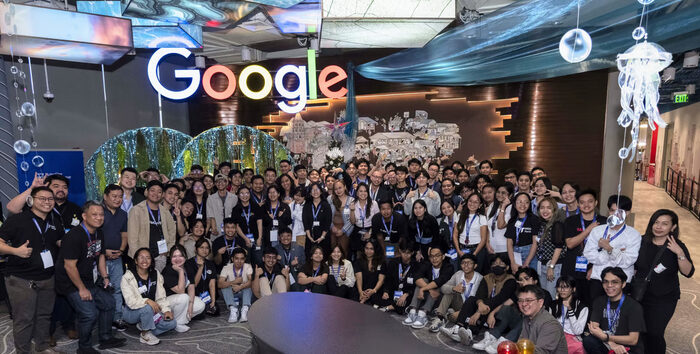
In 24 Hours, Filipino Teams Built 13 Apps for Social Good at FlutterFlow HackFest: Impact Challenge

vritimes

Senin, 2 Desember 2024

facebook twitter whatsapp telegram line copy

URL berhasil dicopy

facebook icon twitter icon whatsapp icon telegram icon line icon copy

URL berhasil dicopy

The FlutterFlow HackFest: Impact Challenge, hosted by FlutterFlow Developer Group (FFDG) Manila, showcased the talents of Filipino developers during a 24-hour hackathon aimed at addressing global challenges. Held from November 22-23, 2024, in Taguig City and Makati City, the event saw 13 teams creating apps aligned with the Sustainable Development Goals (SDGs), focusing on health, education, and sustainable communities. Grand prize winner Team Null developed Sustancia, an AI-powered nutrition app, while Team Flux’s Inspectrum utilized eye-gaze tracking for ADHD and ASD detection, earning second place. Team Neosolve’s gamified productivity app Procrash secured third.

The event benefited from mentorship and guidance from industry experts, and the innovative apps tackled real-world problems with solutions like waste management, accessibility, and mental health support. Demonstrating the power of FlutterFlow to accelerate development, the hackathon reinforced FFDG Manila’s mission to inspire Filipino tech talent and drive positive social change. FlutterFlow played a pivotal role in the hackathon, empowering participants to rapidly develop their ideas into functional apps through its intuitive drag-and-drop interface and powerful features. The platform enabled teams to focus on innovation and problem-solving without getting bogged down in complex coding.

Filipino Developers Create 13 Apps for Social Good at FlutterFlow HackFest: Impact Challenge Manila, Philippines (November 23-24, 2024) – The FlutterFlow HackFest: Impact Challenge, hosted by the FlutterFlow Developer Group (FFDG) Manila, celebrated the creativity and ingenuity of Filipino developers as they raced against the clock to build solutions for global challenges. Over an exhilarating 24-hour hackathon, 13 teams crafted innovative applications with the power to drive social impact and advance sustainable development.

Turning Ideas into Impact in 24 Hours

The HackFest kicked off on November 22 at the Google Philippines office in Bonifacio Global City, Taguig City, where participants drew inspiration from keynote speakers. Jan Michael Jaudian, Head of Customer Engineering for the Philippines and Vietnam at Google, highlighted how technology serves as both a catalyst and toolkit for solving real-world problems. Elmerei Cuevas, Social Innovation Analyst at the United Nations Development Programme (UNDP), offered a compelling overview of the Philippines’ progress on the Sustainable Development Goals (SDGs), motivating participants to develop meaningful apps for social good and sustainable development.

On November 23, the action culminated at Common Ground Rockwell in Makati City with an electrifying Demo Day. Teams presented apps developed entirely in 24 hours using FlutterFlow’s intuitive platform.

·        Team Null clinched the ₱50,000 grand prize with Sustancia, an AI-powered app designed to foster balanced eating habits and provide city-wide nutrition insights.

·        Team Flux took second place and a ₱30,000 prize with Inspectrum, an innovative app utilizing eye gaze tracking technology to aid in the early detection of ADHD and ASD.

·        Team Neosolve earned the ₱20,000 third-place prize for Procrash, a gamified productivity app that transforms habit-building into an engaging adventure.

Mentors and Judges:

Participants received guidance from an exceptional lineup of mentors and judges, including industry luminaries like Steve Ng (FlutterFlow), Allan Tan (Predictive Systems Inc), Miguel Fermin (White Cloak Technologies), Vince Rocha (Mylo Speech Buddy), Jeff Mendoza (MyCondoPal), Myles Delfin (BikeScout), Joshua de Guzman (Dub), Jake Go (Springboard), Albert Padin (mWell), Atty. Hazel Manaog-Mendoza, and Michie Ang (Women Who Code). Their expertise was pivotal in shaping the participants’ ideas into impactful solutions. Special appreciation is also extended to Dominic Medenilla (Google), whose efforts ensured the hackathon’s success.

Apps Driving Social Good Aligned with SDGs

The 13 innovative apps developed at the HackFest addressed challenges across three key Sustainable Development Goals (SDGs):

·        SDG 3: Good Health and Well-being – Apps like Sustancia, Inspectrum, Optimai, and AI Rescue addressed nutrition, early disease detection, providing mental health support, and improving emergency response.

·        SDG 4: Quality Education – Solutions such as Ipaglaban Mo, ElevatEd, Procrash, and A11y focused on delivering legal education, supporting learners with dyscalculia, enhancing productivity, and creating a web accessibility platform.

·        SDG 11: Sustainable Cities and Communities – Apps like ECO Learn, SureBin, Scrapify, Repari, and Rent ‘n Lend offered innovative solutions for environmental sustainability, efficient waste management, recycling, household repairs, and community resource-sharing.

Paving the Way for Social Good Through Technology

With FlutterFlow, developers, designers and tech enthusiasts can now bring ideas to life in just 24 hours, as demonstrated by FlutterFlow HackFest: Impact Challenge. This accelerated development process empowers everyone to experiment and iterate quickly. The event showcased the overall potential of FlutterFlow to drive innovation and social impact.

FlutterFlow Developer Group (FFDG) Manila is committed to inspiring a new generation of Filipino tech talent. By fostering a community of passionate developers, we aim to drive positive change and build a brighter future for the Philippines.

For more information, visit:

https://www.facebook.com/ffdgmanila/

This Press Release has also been published on VRITIMES

Berita Terkait

Boost asset performance, cut downtime, and stay ahead of competitors with PetroSync Reliability & Maintenance training for business leaders. In today’s competitive industrial landscape, asset performance is no longer a technical concern—it is a business imperative. If your competitors can maintain higher equipment availability, reduce downtime, and respond faster to failures, they gain an advantage that directly affects market share, profitability, and customer trust. As a business leader, you may already sense this pressure. The uncomfortable question is not whether reliability matters, but whether your organization is moving fast enough. When Your Competitors Fix Assets Faster Than You Can Imagine two companies operating similar assets in the same market. One experiences frequent unplanned shutdowns, while the other maintains steady production with minimal disruption. The difference is rarely luck—it is capability. Organizations that invest in reliability and maintenance competencies empower their teams to detect issues earlier, prioritize the right tasks, and execute maintenance with precision. Studies consistently show that mature reliability programs can improve maintenance productivity by 15–25%, simply by reducing reactive work and improving planning accuracy. While your team struggles with fire-fighting mode, competitors with structured reliability frameworks move faster, recover quicker, and deliver more consistent output. Over time, that performance gap becomes impossible to ignore. The Hidden Cost of “Business as Usual” in Reliability and Maintenance Many companies underestimate the cost of maintaining the status quo. On the surface, operations may appear stable—but beneath it lies inefficiency. Unoptimized maintenance strategies often lead to: Excessive overtime and labor waste Spare parts overstocking or critical shortages Repeated failures that erode asset life According to industry benchmarks, poor maintenance practices can consume up to 30% of total operating costs. Meanwhile, organizations that adopt reliability-centered approaches typically achieve 10–20% operational efficiency improvements, freeing capital for growth rather than repairs. If competitors are already operating leaner and smarter, continuing “business as usual” is not neutral—it is a risk. How Smart Reliability Leaders Turn Technology Into a Competitive Weapon Forward-thinking leaders understand that reliability excellence is no longer driven by people alone—it is amplified by technology. AI-powered maintenance tools, including intelligent chatbots, are increasingly used to support frontline teams. These systems help technicians access procedures, historical failure data, and troubleshooting guidance instantly. The result is faster decision-making, fewer errors, and reduced dependency on limited expert resources. Organizations implementing AI-assisted maintenance solutions report: Faster issue resolution and improved team productivity Reduced training time for new technicians Operational cost savings of up to 20–30% by minimizing downtime and unnecessary interventions However, technology only delivers value when paired with strong reliability fundamentals. This is where professional capability development becomes critical. Programs such as CMRP Training and CRE Training equip professionals with the strategic and analytical skills needed to turn tools and data into real performance gains. Staying Relevant in an Era Where Asset Performance Defines Market Winners The reality is simple: markets reward organizations that can sustain asset performance under pressure. Those that fail to evolve risk falling behind—not because they lack assets, but because they lack reliability leadership. Reliability-centered methodologies help businesses shift from reactive maintenance to structured decision-making. Programs like ARCM Training enable teams to align maintenance activities with business risk, ensuring resources are focused where they matter most. Meanwhile, RCA Training helps organizations break the cycle of recurring failures that quietly drain profitability. For business leaders, investing in reliability and maintenance capability is not just about equipment—it is about protecting competitiveness. When your competitors can deliver faster, cheaper, and more reliably, the cost of inaction becomes far greater than the cost of transformation. About PetroSync Global Internasional PetroSync was established in Singapore in 2010 and began its expansion into Indonesia in 2013. To this day, PetroSync has become a leading oil and gas training provider, with a participant passing rate as high as 90%. This Press Release has also been published on VRITIMES

Duo Machineast Malaysia Tampil di BINUS @Medan, Dari Tipografi Kinetik ke Media Digital
KAI Logistik Pastikan Kesiapan Layanan Hadapi Angkutan Natal dan Tahun Baru 2025/2026
KAI Logistik Optimalkan KA Kontainer Reefer, Jaga Distribusi Pangan Segar Selama Natal dan Tahun Baru
Tingkatkan Keselamatan dan Kelancaran Perjalanan Kereta Api, KAI Daop 2 Bandung Lakukan Penggantian Rel dan Wesel KA di Sejumlah Titik
Natal dan Tahun Baru Aman, Wakil MUI Sekaligus Ketua FKUB DKI Jakarta Apresiasi Polri
BRI Region 6/Jakarta 1 Rayakan HUT ke-130 dengan Tumpengan dan Penghargaan
Dorong Masyarakat Gunakan Transportasi Umum saat Libur Akhir Tahun, KAI Terapkan Tarif Akhir Pekan pada Layanan LRT Jabodebek

Berita Terbaru

Event

Boost asset performance, cut downtime, and stay ahead of competitors with PetroSync Reliability & Maintenance training for business leaders. In today’s competitive industrial landscape, asset performance is no longer a technical concern—it is a business imperative. If your competitors can maintain higher equipment availability, reduce downtime, and respond faster to failures, they gain an advantage that directly affects market share, profitability, and customer trust. As a business leader, you may already sense this pressure. The uncomfortable question is not whether reliability matters, but whether your organization is moving fast enough. When Your Competitors Fix Assets Faster Than You Can Imagine two companies operating similar assets in the same market. One experiences frequent unplanned shutdowns, while the other maintains steady production with minimal disruption. The difference is rarely luck—it is capability. Organizations that invest in reliability and maintenance competencies empower their teams to detect issues earlier, prioritize the right tasks, and execute maintenance with precision. Studies consistently show that mature reliability programs can improve maintenance productivity by 15–25%, simply by reducing reactive work and improving planning accuracy. While your team struggles with fire-fighting mode, competitors with structured reliability frameworks move faster, recover quicker, and deliver more consistent output. Over time, that performance gap becomes impossible to ignore. The Hidden Cost of “Business as Usual” in Reliability and Maintenance Many companies underestimate the cost of maintaining the status quo. On the surface, operations may appear stable—but beneath it lies inefficiency. Unoptimized maintenance strategies often lead to: Excessive overtime and labor waste Spare parts overstocking or critical shortages Repeated failures that erode asset life According to industry benchmarks, poor maintenance practices can consume up to 30% of total operating costs. Meanwhile, organizations that adopt reliability-centered approaches typically achieve 10–20% operational efficiency improvements, freeing capital for growth rather than repairs. If competitors are already operating leaner and smarter, continuing “business as usual” is not neutral—it is a risk. How Smart Reliability Leaders Turn Technology Into a Competitive Weapon Forward-thinking leaders understand that reliability excellence is no longer driven by people alone—it is amplified by technology. AI-powered maintenance tools, including intelligent chatbots, are increasingly used to support frontline teams. These systems help technicians access procedures, historical failure data, and troubleshooting guidance instantly. The result is faster decision-making, fewer errors, and reduced dependency on limited expert resources. Organizations implementing AI-assisted maintenance solutions report: Faster issue resolution and improved team productivity Reduced training time for new technicians Operational cost savings of up to 20–30% by minimizing downtime and unnecessary interventions However, technology only delivers value when paired with strong reliability fundamentals. This is where professional capability development becomes critical. Programs such as CMRP Training and CRE Training equip professionals with the strategic and analytical skills needed to turn tools and data into real performance gains. Staying Relevant in an Era Where Asset Performance Defines Market Winners The reality is simple: markets reward organizations that can sustain asset performance under pressure. Those that fail to evolve risk falling behind—not because they lack assets, but because they lack reliability leadership. Reliability-centered methodologies help businesses shift from reactive maintenance to structured decision-making. Programs like ARCM Training enable teams to align maintenance activities with business risk, ensuring resources are focused where they matter most. Meanwhile, RCA Training helps organizations break the cycle of recurring failures that quietly drain profitability. For business leaders, investing in reliability and maintenance capability is not just about equipment—it is about protecting competitiveness. When your competitors can deliver faster, cheaper, and more reliably, the cost of inaction becomes far greater than the cost of transformation. About PetroSync Global Internasional PetroSync was established in Singapore in 2010 and began its expansion into Indonesia in 2013. To this day, PetroSync has become a leading oil and gas training provider, with a participant passing rate as high as 90%. This Press Release has also been published on VRITIMES

Berita Terkait

Jumat, 2 Januari 2026 - 20:35

Boost asset performance, cut downtime, and stay ahead of competitors with PetroSync Reliability & Maintenance training for business leaders. In today’s competitive industrial landscape, asset performance is no longer a technical concern—it is a business imperative. If your competitors can maintain higher equipment availability, reduce downtime, and respond faster to failures, they gain an advantage that directly affects market share, profitability, and customer trust. As a business leader, you may already sense this pressure. The uncomfortable question is not whether reliability matters, but whether your organization is moving fast enough. When Your Competitors Fix Assets Faster Than You Can Imagine two companies operating similar assets in the same market. One experiences frequent unplanned shutdowns, while the other maintains steady production with minimal disruption. The difference is rarely luck—it is capability. Organizations that invest in reliability and maintenance competencies empower their teams to detect issues earlier, prioritize the right tasks, and execute maintenance with precision. Studies consistently show that mature reliability programs can improve maintenance productivity by 15–25%, simply by reducing reactive work and improving planning accuracy. While your team struggles with fire-fighting mode, competitors with structured reliability frameworks move faster, recover quicker, and deliver more consistent output. Over time, that performance gap becomes impossible to ignore. The Hidden Cost of “Business as Usual” in Reliability and Maintenance Many companies underestimate the cost of maintaining the status quo. On the surface, operations may appear stable—but beneath it lies inefficiency. Unoptimized maintenance strategies often lead to: Excessive overtime and labor waste Spare parts overstocking or critical shortages Repeated failures that erode asset life According to industry benchmarks, poor maintenance practices can consume up to 30% of total operating costs. Meanwhile, organizations that adopt reliability-centered approaches typically achieve 10–20% operational efficiency improvements, freeing capital for growth rather than repairs. If competitors are already operating leaner and smarter, continuing “business as usual” is not neutral—it is a risk. How Smart Reliability Leaders Turn Technology Into a Competitive Weapon Forward-thinking leaders understand that reliability excellence is no longer driven by people alone—it is amplified by technology. AI-powered maintenance tools, including intelligent chatbots, are increasingly used to support frontline teams. These systems help technicians access procedures, historical failure data, and troubleshooting guidance instantly. The result is faster decision-making, fewer errors, and reduced dependency on limited expert resources. Organizations implementing AI-assisted maintenance solutions report: Faster issue resolution and improved team productivity Reduced training time for new technicians Operational cost savings of up to 20–30% by minimizing downtime and unnecessary interventions However, technology only delivers value when paired with strong reliability fundamentals. This is where professional capability development becomes critical. Programs such as CMRP Training and CRE Training equip professionals with the strategic and analytical skills needed to turn tools and data into real performance gains. Staying Relevant in an Era Where Asset Performance Defines Market Winners The reality is simple: markets reward organizations that can sustain asset performance under pressure. Those that fail to evolve risk falling behind—not because they lack assets, but because they lack reliability leadership. Reliability-centered methodologies help businesses shift from reactive maintenance to structured decision-making. Programs like ARCM Training enable teams to align maintenance activities with business risk, ensuring resources are focused where they matter most. Meanwhile, RCA Training helps organizations break the cycle of recurring failures that quietly drain profitability. For business leaders, investing in reliability and maintenance capability is not just about equipment—it is about protecting competitiveness. When your competitors can deliver faster, cheaper, and more reliably, the cost of inaction becomes far greater than the cost of transformation. About PetroSync Global Internasional PetroSync was established in Singapore in 2010 and began its expansion into Indonesia in 2013. To this day, PetroSync has become a leading oil and gas training provider, with a participant passing rate as high as 90%. This Press Release has also been published on VRITIMES

Jumat, 2 Januari 2026 - 17:09

Duo Machineast Malaysia Tampil di BINUS @Medan, Dari Tipografi Kinetik ke Media Digital

Jumat, 2 Januari 2026 - 11:25

KAI Logistik Pastikan Kesiapan Layanan Hadapi Angkutan Natal dan Tahun Baru 2025/2026

Jumat, 2 Januari 2026 - 09:34

KAI Logistik Optimalkan KA Kontainer Reefer, Jaga Distribusi Pangan Segar Selama Natal dan Tahun Baru

Kamis, 1 Januari 2026 - 20:53

Tingkatkan Keselamatan dan Kelancaran Perjalanan Kereta Api, KAI Daop 2 Bandung Lakukan Penggantian Rel dan Wesel KA di Sejumlah Titik

Berita Terbaru

Event

Boost asset performance, cut downtime, and stay ahead of competitors with PetroSync Reliability & Maintenance training for business leaders. In today’s competitive industrial landscape, asset performance is no longer a technical concern—it is a business imperative. If your competitors can maintain higher equipment availability, reduce downtime, and respond faster to failures, they gain an advantage that directly affects market share, profitability, and customer trust. As a business leader, you may already sense this pressure. The uncomfortable question is not whether reliability matters, but whether your organization is moving fast enough. When Your Competitors Fix Assets Faster Than You Can Imagine two companies operating similar assets in the same market. One experiences frequent unplanned shutdowns, while the other maintains steady production with minimal disruption. The difference is rarely luck—it is capability. Organizations that invest in reliability and maintenance competencies empower their teams to detect issues earlier, prioritize the right tasks, and execute maintenance with precision. Studies consistently show that mature reliability programs can improve maintenance productivity by 15–25%, simply by reducing reactive work and improving planning accuracy. While your team struggles with fire-fighting mode, competitors with structured reliability frameworks move faster, recover quicker, and deliver more consistent output. Over time, that performance gap becomes impossible to ignore. The Hidden Cost of “Business as Usual” in Reliability and Maintenance Many companies underestimate the cost of maintaining the status quo. On the surface, operations may appear stable—but beneath it lies inefficiency. Unoptimized maintenance strategies often lead to: Excessive overtime and labor waste Spare parts overstocking or critical shortages Repeated failures that erode asset life According to industry benchmarks, poor maintenance practices can consume up to 30% of total operating costs. Meanwhile, organizations that adopt reliability-centered approaches typically achieve 10–20% operational efficiency improvements, freeing capital for growth rather than repairs. If competitors are already operating leaner and smarter, continuing “business as usual” is not neutral—it is a risk. How Smart Reliability Leaders Turn Technology Into a Competitive Weapon Forward-thinking leaders understand that reliability excellence is no longer driven by people alone—it is amplified by technology. AI-powered maintenance tools, including intelligent chatbots, are increasingly used to support frontline teams. These systems help technicians access procedures, historical failure data, and troubleshooting guidance instantly. The result is faster decision-making, fewer errors, and reduced dependency on limited expert resources. Organizations implementing AI-assisted maintenance solutions report: Faster issue resolution and improved team productivity Reduced training time for new technicians Operational cost savings of up to 20–30% by minimizing downtime and unnecessary interventions However, technology only delivers value when paired with strong reliability fundamentals. This is where professional capability development becomes critical. Programs such as CMRP Training and CRE Training equip professionals with the strategic and analytical skills needed to turn tools and data into real performance gains. Staying Relevant in an Era Where Asset Performance Defines Market Winners The reality is simple: markets reward organizations that can sustain asset performance under pressure. Those that fail to evolve risk falling behind—not because they lack assets, but because they lack reliability leadership. Reliability-centered methodologies help businesses shift from reactive maintenance to structured decision-making. Programs like ARCM Training enable teams to align maintenance activities with business risk, ensuring resources are focused where they matter most. Meanwhile, RCA Training helps organizations break the cycle of recurring failures that quietly drain profitability. For business leaders, investing in reliability and maintenance capability is not just about equipment—it is about protecting competitiveness. When your competitors can deliver faster, cheaper, and more reliably, the cost of inaction becomes far greater than the cost of transformation. About PetroSync Global Internasional PetroSync was established in Singapore in 2010 and began its expansion into Indonesia in 2013. To this day, PetroSync has become a leading oil and gas training provider, with a participant passing rate as high as 90%. This Press Release has also been published on VRITIMES

Jumat, 2 Jan 2026 - 20:35